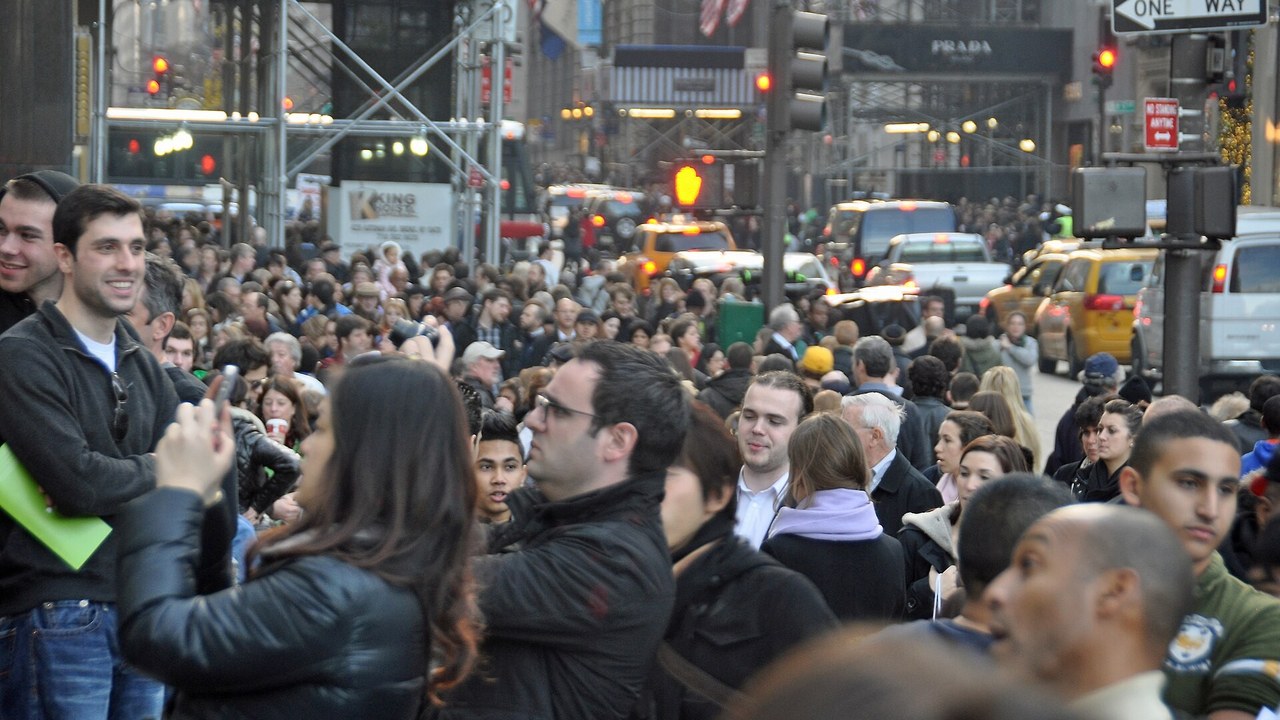
The true story starts in Philadelphia in the early 1950s. The day after Thanksgiving brought two things to the city at once: huge crowds of suburban shoppers flooding downtown, and the annual Army–Navy football game on the Saturday. Police officers worked 12-hour shifts with no day off, dealing with traffic jams, accidents and shoplifting. It was, from inside the department, a dark day — and the officers' joke about it stuck. By the early 1960s the term 'Black Friday' had caught on in Philadelphia, and merchants, who hated the name, tried to rebrand it 'Big Friday' in 1961. The rebrand failed.
The profit story came much later. In the late 1970s and 1980s, retailers began claiming the day was when shops moved from 'in the red' — losing money — to 'in the black' — making a profit. It was a neat story and a useful one, and it spread as the term went national in the late 1980s. It was also invented: the name had existed for decades by then, and most stores in fact saw their biggest sales on the Saturday before Christmas, not on Black Friday. The 'in the black' explanation is a rebranding, not a history.
There is an even older Black Friday, and it has nothing to do with shopping. The first-ever 'Black Friday' was Friday, September 24, 1869, when financiers Jay Gould and Jim Fisk tried to corner the US gold market and the scheme collapsed after President Ulysses S. Grant intervened — a stock-market crash that bankrupted thousands. Same name, no connection. And one claim deserves a flat denial: a theory circulating on social media says Black Friday comes from selling enslaved people at a discount after Thanksgiving. It has been repeatedly proven false and has no historical basis.
THE KEY NUMBERS
Friday, November 27, 2026 — Black Friday this year, the day after Thanksgiving (November 26).
Monday, November 30, 2026 — Cyber Monday.
12 hours — the shifts Philadelphia police worked on Black Friday in the 1950s, with no day off.
1961 — the year merchants tried to rename it 'Big Friday.' It failed.
September 24, 1869 — the first 'Black Friday,' a gold-market crash, 90 years before the shopping name.
Late 1980s — when the term spread from Philadelphia to the whole country.
THE STORY SO FAR
1863 — Thanksgiving is recognised as a holiday; 1870 — Grant makes Christmas a federal holiday, effectively creating the holiday shopping season.
September 24, 1869 — the first 'Black Friday': Gould and Fisk's gold corner collapses.
Late 1800s — stores begin running day-after-Thanksgiving sales.
1951 — Factory Management and Maintenance magazine complains of 'Friday-after-Thanksgiving-itis,' workers calling in sick.
Mid-1950s — Philadelphia police coin 'Black Friday' for the chaos of the day.
1961 — merchants try 'Big Friday.' It fails.
Late 1970s–1980s — retailers invent the 'in the black' profit story; the term goes national.
Today — Black Friday opens a weekend of Small Business Saturday, Cyber Monday and Giving Tuesday.
The 1869 crash deserves its own line, because it shows how old the name is. On Friday, September 24, 1869, Jay Gould and Jim Fisk tried to corner the American gold market, buying up gold until the price soared — and when President Ulysses S. Grant ordered the Treasury to sell gold, the price collapsed in hours. Thousands of speculators were bankrupted. The newspapers called it Black Friday, and the name stuck to financial disasters for decades before the Philadelphia police ever used it for shopping.
The weekend the name now opens has grown into a season. Black Friday is followed by Small Business Saturday, Cyber Monday on November 30, and Giving Tuesday — a four-day stretch that retailers treat as the opening of the holiday season. The sales start earlier every year, and the name is now a brand rather than a warning. But the police story is the one that explains it: a day so chaotic that the people paid to manage it gave it the darkest name they could think of, and the name outlived them all.
WHAT HAPPENS NEXT
This Friday, the name will be everywhere — on sale signs, in headlines, in the mouths of shoppers who have never heard the police story. The sales are real, whatever the name means: retailers have been running Black Friday deals for weeks, and the weekend will decide the holiday season. But the name itself is a reminder that the best stories about words are usually the ones told by the people who had to live with them — in this case, the Philadelphia police officers who worked a 12-hour shift, got no day off, and gave the busiest shopping day of the year a name that stuck for 70 years.