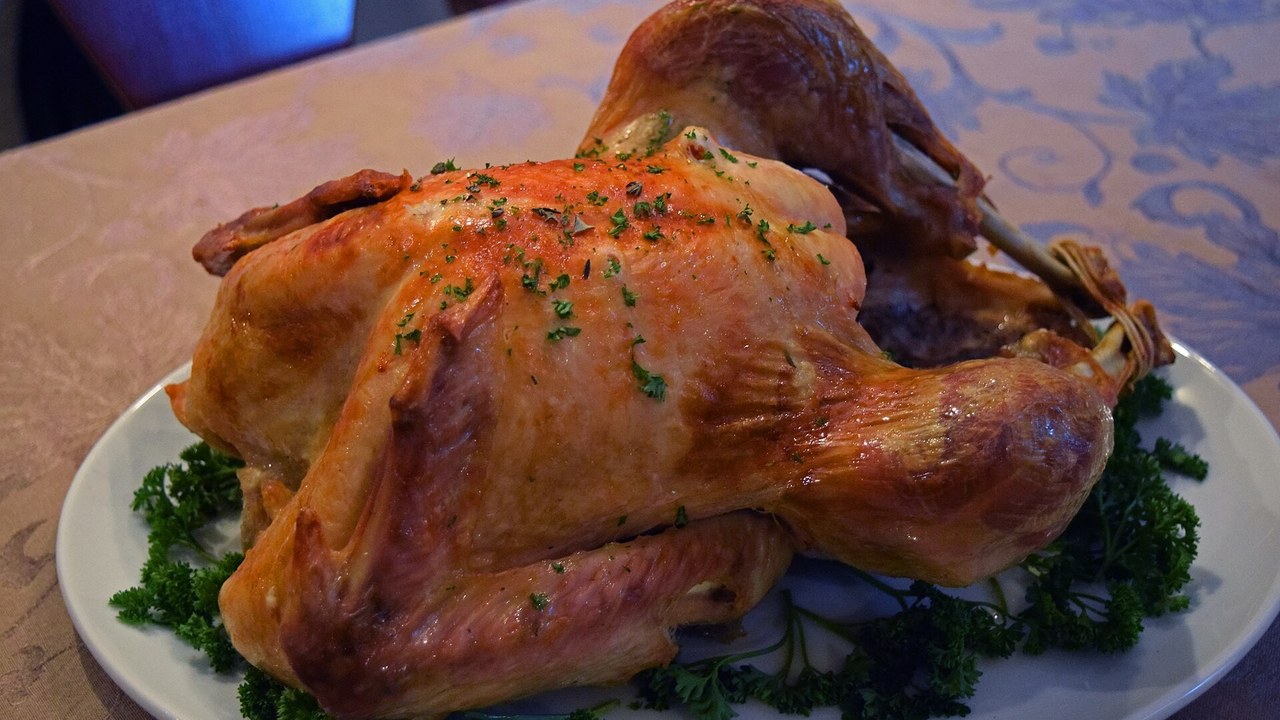
Thanksgiving is four days away, and millions of Americans are about to do the one thing food safety experts have spent years begging them not to do: wash the turkey. According to the U.S. Food and Drug Administration, 68 percent of people wash their turkey before cooking it. The U.S. Department of Agriculture says they should not. 'Wash your hands, but not the turkey!' the USDA's advice reads. Washing a raw turkey does not remove bacteria — the bacteria are loosely attached to the bird, and when you rinse it, the water spreads them around your kitchen: onto countertops, other food, towels, and you. Water can splash bacteria up to three feet from the sink. The USDA calls it cross-contamination.
The numbers behind the warning are stark. USDA research found that one in four people who wash or rinse poultry cross-contaminate other food items being prepared with germs from the poultry. The bacteria in question — Campylobacter and Salmonella, both found in poultry products — can survive on countertops and other kitchen surfaces from four hours to up to 32 hours, which means the germs from a morning rinse are still alive on your counter when you set out the salad at dinner. The USDA's position is simple: move the meat and poultry straight from the package to the pan, because the heat required for cooking will kill any bacteria that may be present. The only way to destroy bacteria on your turkey is to cook it to a safe minimum internal temperature — 165 degrees Fahrenheit, measured with a food thermometer.
That temperature is the number that matters, and the USDA is specific about where to check it: in three places — the thickest part of the breast, the innermost part of the thigh, and the innermost part of the wing must all read 165°F. A turkey that is still pink in places is safe to eat as soon as all three spots reach it. The thermometer is not optional.
There is exactly one exception to the no-washing rule, and it is worth knowing, because it is the exception that confuses people. If your turkey was brined — bought brined, or brined at home — you do need to rinse the brine off before it goes into the oven. But the USDA's instructions for doing it safely show just how seriously the agency takes the splashing problem: remove every dish, towel and sponge from around the sink, cover the area with paper towels, put the roasting pan beside the sink, clean the sink with hot soapy water, and run the water gently so it does not splash. That is it — no scrubbing, no rinsing the rest of the bird. Hold the turkey up to drain, place it in the pan, and clean the sink and the area around it with hot soapy water. The rinse is only for the brine.
The rest of the USDA's Thanksgiving advice prevents the second most common mistake: the leftovers. Cooked food left out at room temperature has only two hours before it becomes unsafe — the danger zone, in which bacteria multiply rapidly, is between 40°F and 140°F. Refrigerate perishable foods within two hours of cooking, in shallow containers, at 40°F or below, and use refrigerated leftovers within three to four days, or freeze them. And if anything goes wrong, the USDA Meat and Poultry Hotline is open on Thanksgiving Day itself, from 8 a.m. to 2 p.m. Eastern Time, at 1-888-MPHotline (1-888-674-6854).
THE SAFE TURKEY CHECKLIST — DO THIS ON THURSDAY
Thaw: in the fridge, 24 hours per 4-5 pounds (a 16-20 lb turkey needs 4-5 days); or cold water, 30 minutes per pound, changing the water every 30 minutes, then cook immediately. Never thaw on the counter. Wash: your hands, with soap, for 20 seconds, before and after handling the turkey — not the turkey itself. If you must rinse a brined bird, clear the sink area, lay down paper towels, run the water gently, and clean everything with hot soapy water afterwards. Cook: to 165°F in three places — breast, thigh, wing — checked with a food thermometer. Leftovers: refrigerate within 2 hours, at 40°F or below; eat within 3-4 days or freeze. Stuck? Call the USDA Meat and Poultry Hotline, 1-888-674-6854 — open Thanksgiving Day 8 a.m. to 2 p.m. ET.
THE KEY NUMBERS
68% — the share of people who wash their turkey before cooking, per the FDA. 1 in 4 — the share of people who wash poultry and cross-contaminate other food, per USDA research. 3 feet — how far rinse water can splash bacteria from your sink. 4 to 32 hours — how long Campylobacter and Salmonella can survive on kitchen surfaces. 165°F — the safe minimum internal temperature, in three places: breast, thigh, wing. 20 seconds — how long to wash your hands with soap. 24 hours — fridge thawing time per 4-5 pounds of turkey. 2 hours — how long cooked food can safely sit at room temperature. 3-4 days — how long refrigerated leftovers last. November 26, 2026 — Thanksgiving Day.
THE STORY SO FAR
For years, the USDA has advised against washing raw meat and poultry, after research — including studies by Drexel University — showed that rinsing spreads bacteria throughout the kitchen rather than removing it. The advice has been repeated every Thanksgiving, and every year most people ignore it: the FDA's surveys put the share of people who wash their turkey at 68 percent. November 9, 2026: FoodSafety.gov updates its Thanksgiving food safety guidance for this year, restating the no-washing rule, the 165°F temperature, and the two-hour leftovers limit. November 22, 2026: with Thanksgiving four days away, the guidance is the story again — because the turkey in millions of American freezers is about to be thawed.
WHAT HAPPENS NEXT
Thursday is the test. The turkeys come out of the fridge, the sinks fill up, and the 68 percent will do what they have always done — unless this is the year the number moves. The USDA's hotline will be staffed on Thanksgiving Day from 8 a.m. to 2 p.m. Eastern Time for the cooks who get stuck, and its Ask Karen virtual assistant is available around the clock at AskKaren.gov. The advice itself will not change: wash your hands for 20 seconds, do not wash the bird, cook it to 165°F in three places, and get the leftovers into the fridge within two hours.