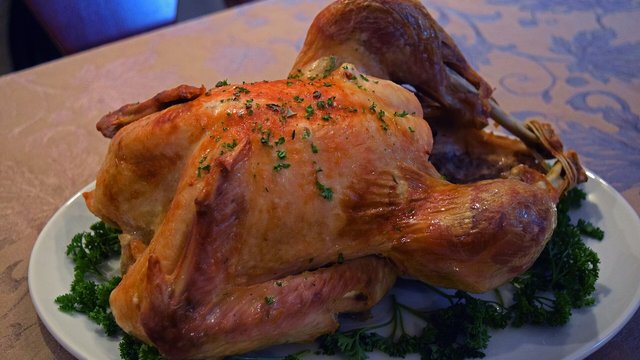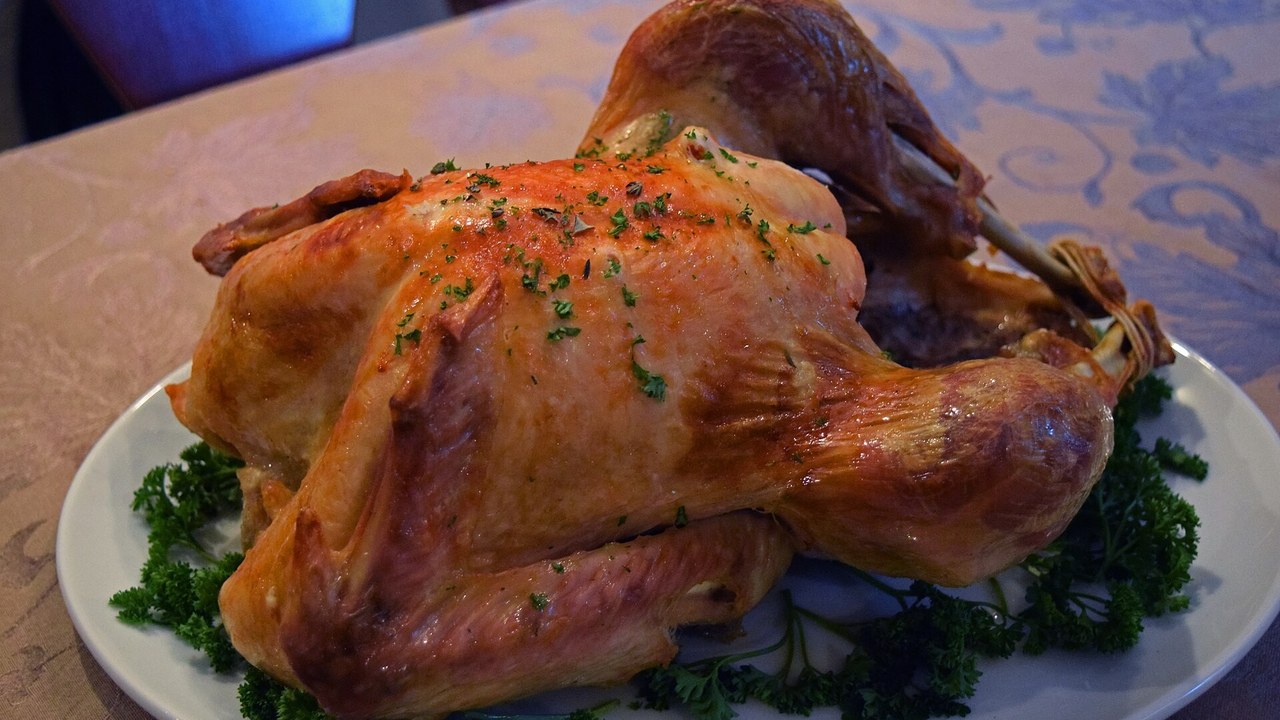
Here is the awkward truth about the turkey on your Thanksgiving table: it probably was not on the table at the first Thanksgiving at all. The meal everyone pictures — Pilgrims and Wampanoag sharing a roast turkey in 1621 — is mostly a 19th-century invention. The bird became the centrepiece for three practical reasons, plus one very determined magazine editor who spent 36 years campaigning for a national holiday.
The turkey won because it was the right bird at the right moment: native to North America, big enough to feed a whole family, cheap to spare, and just fancy enough to feel like a feast. The Pilgrims were almost an accident in its story.
WHAT THE FIRST THANKSGIVING ACTUALLY SERVED
The Plymouth harvest celebration in the autumn of 1621 lasted three days. About 50 English colonists and roughly 90 Wampanoag men, led by Massasoit, shared food — and we know the menu from just two surviving documents. Edward Winslow, who was there, wrote home in a letter dated December 11, 1621: the governor sent four men out hunting wildfowl, and in one day they killed enough birds to feed the colony for almost a week. Massasoit's men killed five deer, which they brought to the plantation. Bradford added that there was a 'great store of wild turkeys' around Plymouth that autumn — but he never said a turkey was served at the feast.
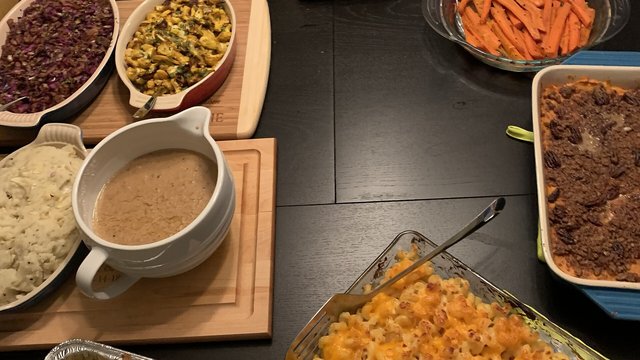
Historians are certain about three foods, and only three. 'Wildfowl was there. Corn, in grain form for bread or for porridge, was there. Venison was there,' says Kathleen Wall, a foodways culinarian at Plimoth Patuxet. 'These are absolutes.' The wildfowl was probably ducks or geese, though swan and passenger pigeons were also available. Turkey was possible, but not the centrepiece — and the meal had no pumpkin pie, no mashed potatoes, no cranberry sauce and no bread stuffing, because the colonists had no butter or wheat flour for pastry, and potatoes had not reached New England yet. Eels and shellfish were probably on the table too.
The gathering itself was, a Smithsonian curator says, 'a complete non-event' at the time. It was not repeated the next year, and it was largely forgotten for two centuries, until Winslow's letter and Bradford's manuscript were rediscovered in the 1800s. In 1841, a Boston clergyman, Alexander Young, printed Winslow's letter and declared the feast the 'first Thanksgiving' in a footnote.
WHY TURKEY WON: THREE PRACTICAL REASONS
First, the bird was plentiful: one expert estimated at least 10 million wild turkeys in America at European contact, and it is native to North America — Benjamin Franklin called it a 'true original native of America' in 1784. Second, a turkey was raised for meat and nothing else. On a family farm, a cow gave milk and a hen laid eggs all year, so slaughtering one cost months of food; a turkey cost nothing but itself. Third, one bird was big enough to feed a whole family — and it felt special, more expensive than chicken or pork, so it felt like a feast. By the turn of the 19th century, turkey was already popular at Thanksgiving occasions in New England. What it needed was someone to make it the national habit.
THE EDITOR WHO PUT TURKEY AT THE HEAD OF THE TABLE
That someone was Sarah Josepha Hale, editor of Godey's Lady's Book, America's most widely read magazine. In her 1827 novel Northwood, she devoted an entire chapter to a New England Thanksgiving, with a roasted turkey 'placed at the head of the table.' Then she spent the next 36 years campaigning for a national holiday — writing editorials, publishing Thanksgiving recipes and menus, and sending letters to governors and presidents. Four presidents said no. In September 1863, in the middle of the Civil War, she wrote to Abraham Lincoln, arguing a national day of thanks would help unify a country tearing itself apart. Five days later, on October 3, 1863, Lincoln proclaimed it — with Hale's menu, turkey and all, spreading with it.
Some credit Charles Dickens's A Christmas Carol (1843) with bolstering turkey as a holiday meal, and the timing fits. But Hale did the work: by the 1850s most states and territories were already celebrating Thanksgiving, and her readers — a generation of women told in print exactly what the perfect Thanksgiving table looked like — were ready when the holiday became national. By the end of the 19th century, people across the country called it 'Turkey Day.' Even the side dishes followed her script. And more than a century later, the green bean casserole — invented in 1955 by Dorcas Reilly at Campbell's — joined the table, now served in some 20 million American households every Thanksgiving.
THE STORY SO FAR
Autumn 1621: The Plymouth harvest celebration — venison, wildfowl and corn over three days; no turkey on the confirmed menu. 1784: Benjamin Franklin calls the turkey a 'respectable bird.' 1827: Hale publishes Northwood, turkey 'placed at the head of the table.' 1841: Alexander Young prints Winslow's letter and names the feast the 'first Thanksgiving.' 1846: Hale begins petitioning presidents. October 3, 1863: Lincoln proclaims a national Thanksgiving. Late 1800s: The holiday is widely called 'Turkey Day.' 1955: Dorcas Reilly invents green bean casserole. Today: About 46 million turkeys are eaten at Thanksgiving, and 88% of Americans eat turkey.
THE NUMBERS ON TODAY'S TABLE
The National Turkey Federation estimates about 46 million turkeys are eaten at Thanksgiving — roughly a fifth of all turkeys produced in the United States each year, per the U.S. Department of Agriculture. The average bird weighs about 16 pounds — roughly 736 million pounds of turkey on a single day. About 88% of Americans eat turkey — nearly 301 million people. And if you are carving this year, remember the USDA's warning: do not wash your turkey. Rinsing it spreads germs up to three feet around your sink — our guide to the USDA's warning explains the full rule.
WHAT HAPPENS NEXT
The turkey is not going anywhere — but the table around it keeps changing. Plant-based mains, smoked and fried birds, and smaller gatherings are all growing, and the average bird keeps getting bigger, which means more leftovers and fewer second turkeys. What will not change is why the bird is there at all: it was never about the Pilgrims. It was about a practical farm bird, a magazine editor with a 36-year campaign, and a country that needed a shared meal. The turkey did not make Thanksgiving. Thanksgiving made the turkey.