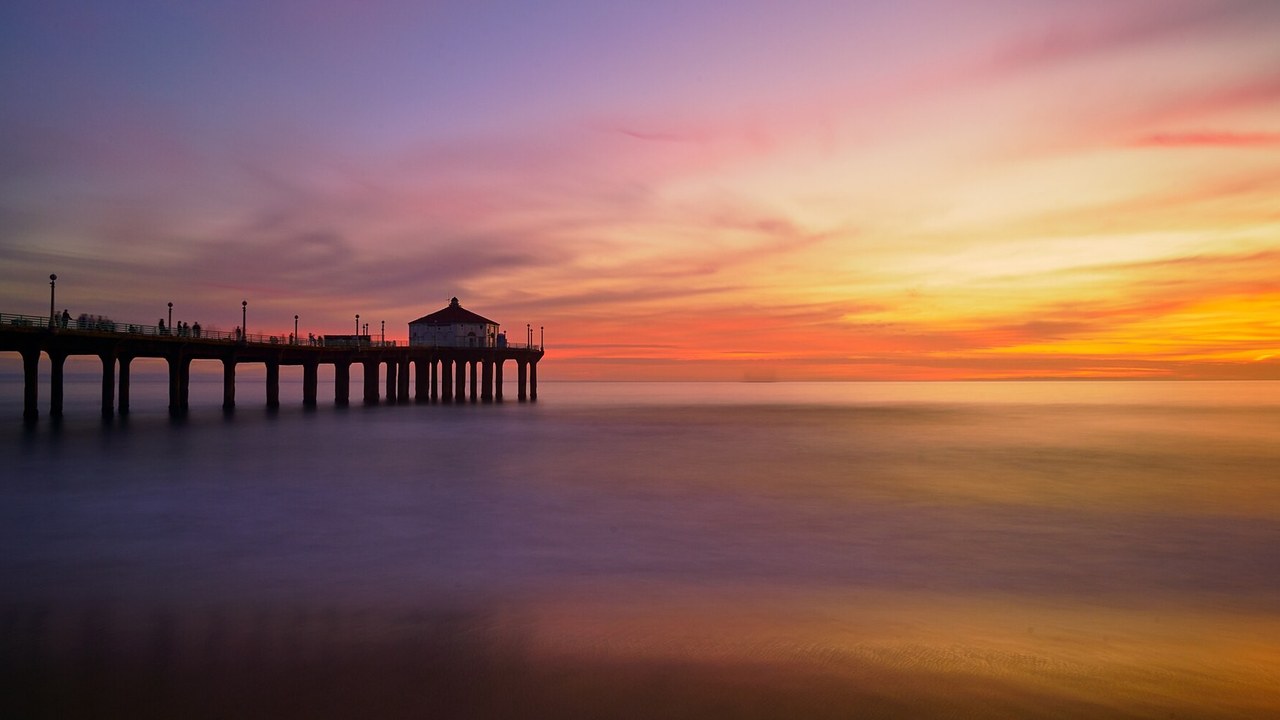
A magnitude 3.3 earthquake struck just off Manhattan Beach on Sunday night, shaking Los Angeles for the third time in three days. The U.S. Geological Survey puts the quake about 3 miles off the coast, at 9:17 p.m. on Sunday, November 22 — and more than 2,400 people had already told the agency they felt it by early Monday morning.
The epicenter was about 5 kilometres west-southwest of Manhattan Beach, at a depth of about 6.2 miles, according to the USGS. The shaking was light — the agency's highest reported intensity was 3.4 on its felt scale, strong enough to rattle windows across the South Bay, but not to damage buildings. As of 9:30 p.m. on Sunday, no injuries or major building damage had been reported.
It was the third earthquake of magnitude 3.3 or larger to hit the Los Angeles area since Friday morning, and the fourth notable California quake in four days, counting Thursday night's 5.0 near Pinnacles National Park. None of them caused damage. All of them were felt. And each one sent the same question spiking on Google — “earthquake now” was among the fastest-rising searches in the United States on Sunday night.
What Officials Found
By 9:30 p.m. — roughly 15 minutes after the shaking — FOX 11 Los Angeles reported no injuries or major building damage. The USGS issued no alert for the quake, and its preliminary magnitude may still change: the reading is automatic, and a seismologist has not yet reviewed it. The agency is asking anyone who felt the shaking to report it on its “Did You Feel It?” page — the count had already passed 2,400 by early Monday, and it was still climbing.
Why So Many People Felt Such A Small Quake
A 3.3 is small. Most earthquakes that size pass without anyone noticing. This one did not, and the timing is a large part of why: it struck at 9:17 p.m. on a Sunday night, when millions of people across the Los Angeles Basin were home, awake and sitting still. The epicenter was also close to shore, just off one of the most densely populated stretches of coastline in California, with Manhattan Beach, Redondo Beach and Torrance all within a few miles. A quake the same size in the desert would have been felt by almost no one. Off Manhattan Beach, it was felt by thousands.
Three Quakes, Three Days
Friday's quake near Commerce was the strongest of the three and by far the most widely felt — nearly 15,000 people reported it to the USGS, and the Los Angeles Fire Department sent crews from all 106 of its fire stations to survey the city before declaring no significant damage. Saturday's quake off San Pedro was the quietest, with just 549 felt reports. Sunday's sits in between: smaller than Friday's, but felt by more than four times as many people as Saturday's — how many people feel a quake depends on where and when it strikes, not just its size.
A magnitude 3.3 earthquake is small. Off Manhattan Beach on a Sunday night, it was felt by thousands anyway.
THE KEY NUMBERS
Magnitude 3.3 — preliminary, from the USGS automatic reading; a seismologist has not yet reviewed it. Depth 6.2 miles (10 kilometres). Time 9:17 p.m. Pacific, Sunday, November 22 (05:17 UTC, Monday, November 23). Epicenter About 3.1 miles west-southwest of Manhattan Beach, off the Los Angeles County coast. Felt reports More than 2,400 and climbing, on the USGS “Did You Feel It?” page. Strongest shaking Intensity 3.4 — light. Damage None reported as of 9:30 p.m. Sunday. Alert None issued by the USGS.
QUESTIONS PEOPLE ARE ASKING
Did Los Angeles have another earthquake? Yes. A magnitude 3.3 struck off Manhattan Beach at 9:17 p.m. on Sunday, November 22 — the third Los Angeles-area quake in three days. Was there any damage? None reported. As of 9:30 p.m. on Sunday, there were no injuries and no major building damage. Was there a tsunami warning? No. The quake was far too small, and the USGS issued no alert. Is a bigger quake coming? Nobody can say. Seismologists cannot predict earthquakes, and small quakes like this one are a normal part of life in California — the state records thousands of them every year. The USGS is monitoring the area and will review Sunday night's preliminary reading.
THE STORY SO FAR
10:49 p.m., Thursday, November 19 — A magnitude 5.0 earthquake strikes near Pinnacles National Park in Central California, followed by more than a dozen aftershocks.
3:25 a.m., Friday, November 20 — A magnitude 4.4 earthquake near Commerce wakes Los Angeles. It is first reported as 4.2. Nearly 15,000 people tell the USGS they felt it.
About 5:30 a.m., Friday — The Los Angeles Fire Department completes its citywide survey from all 106 fire stations: no significant damage or injuries.
6:09 a.m., Saturday, November 21 — A magnitude 3.3 earthquake strikes 10 kilometres south-southeast of San Pedro. 549 people report feeling it.
9:17 p.m., Sunday, November 22 — A magnitude 3.3 earthquake strikes 5 kilometres west-southwest of Manhattan Beach. Within hours, more than 2,400 people have reported feeling it.
Early Monday, November 23 — No injuries or major building damage reported from any of the three Los Angeles-area quakes. The USGS reading for Sunday's quake is still preliminary.
WHAT HAPPENS NEXT
The USGS will review Sunday night's automatic reading, and the magnitude may be adjusted slightly — the Friday quake was revised after review. Small aftershocks are possible, and the agency is monitoring the area. If you felt the shaking, the USGS asks you to report it on its “Did You Feel It?” page — those reports are how scientists map how far a quake was felt. For now, the official picture is quiet: three small quakes, three days, no damage.
After A Quake: A 60-Second Check
Check for a gas smell before switching anything on — if you smell gas, leave the building and call for help from outside. Look for cracks in walls and ceilings, and for anything that has shifted or fallen from shelves. Do not use lifts until the building has been checked. Expect aftershocks: drop, cover and hold on again if the ground moves. And check on neighbours, especially anyone elderly or living alone.