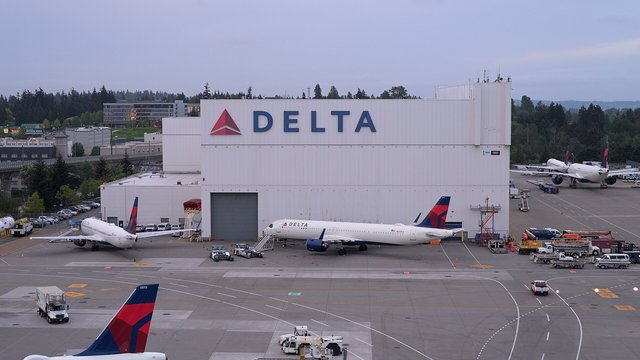
Delta Air Lines' automated weight-and-balance system failed on Sunday morning, November 22 — the first Sunday of the Thanksgiving travel rush — delaying more than 720 Delta flights already. The FAA stopped Atlanta-bound Delta flights at their departure airports, then eased the hold into a ground delay program — but the delays have rippled nationwide on one of the busiest travel weekends of the year.
The broken system works out, for every departing flight, how much the plane weighs once passengers, bags, cargo and fuel are all on board — and whether its centre of gravity sits inside safe limits. No flight can leave the gate without that final load sheet. When the automation stopped working, Delta's ramp crews had to do the maths by hand. A controller at Boston Logan Airport was heard telling the pilots of Delta flight DL-2066 that the airline's load-control system had suffered a 'systemwide outage' — and that on the ramp, crews were 'manually counting bags and doing a report.'
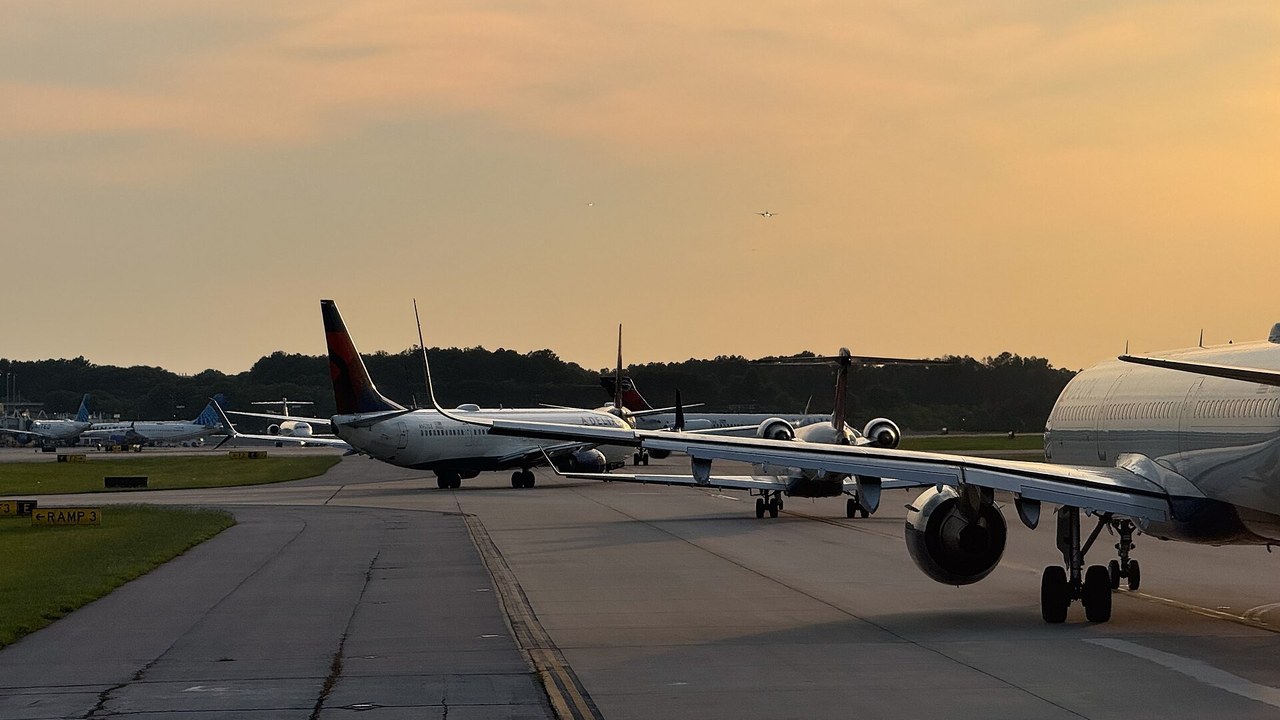
Atlanta felt it first and worst. Hartsfield-Jackson is Delta's home and biggest hub, and the ground stop turned its taxiways into a parking lot. FlightAware counted 364 delayed flights at Atlanta by mid-morning, and the count kept climbing: by late morning, the airport alone had nearly 600 delays. The tracking service Flighty reported Atlanta departures running about 1 hour and 7 minutes late on average, while the FAA's status page put the average delay at 57 minutes, with the longest waits near two hours.
The delays did not stay in Atlanta. Delta passengers reported holds at Newark, LaGuardia, Reagan National, Dulles, Boston, Baltimore, Miami and Minneapolis, and FlightAware's count of delayed Delta flights passed 720 before noon. Two other ground stops hit US airports on Sunday morning — at LaGuardia in New York and George Bush Intercontinental in Houston — but those were fog: low visibility, a separate problem on the same crowded morning. All three ground stops have since been lifted, though Atlanta's ground delay program was scheduled to run until about 1 p.m. ET.
The timing is what makes this one sting. More than 4 million people are expected to pass through Hartsfield-Jackson over the Thanksgiving period, and US airlines project nearly 29 million passengers between November 20 and 30 — about 2.7 million a day. There is almost no slack to absorb a morning like this — a delay at the world's busiest airport becomes a missed connection in Minneapolis or Miami by the afternoon.
Delta says there is no suggestion of a cyberattack, and flights are still departing — just slowly. 'Delta teams are using manual workarounds this morning to safely get flights departed while work continues to restore automation,' the airline said. As of late morning, no Delta cancellations had been reported — the disruption, so far, is delays, not grounded planes.
It is the third aviation technology failure in ten days. On November 13, an FAA telecommunications failure grounded flights nationwide for more than four hours. On November 16, a weight-and-balance failure — the same kind of system that broke at Delta today — held United departures for more than 90 minutes. Three different failures, three different systems, one pattern: the software underneath American air travel keeps breaking at the worst possible moments.
THE KEY NUMBERS
720+ — Delta flights delayed by late Sunday morning, according to FlightAware.
594 — delays at Hartsfield-Jackson Atlanta alone, with 8 cancellations across all airlines there.
57 minutes — the average delay under the FAA's Atlanta ground delay program as of 10:51 a.m. ET; the longest waits reached 1 hour 51 minutes.
8:40 a.m. ET — when the FAA's Atlanta ground stop was downgraded to a ground delay program; the program was set to expire around 1 p.m. ET.
0 — Delta cancellations reported as of late Sunday morning. The story so far is delays, not cancellations.
29 million — passengers US airlines expect between November 20 and 30, about 2.7 million a day.
THE STORY SO FAR
November 13: an FAA telecommunications failure grounds flights nationwide for more than four hours — the first of three aviation tech failures in ten days.
November 16: a weight-and-balance failure holds United departures for more than 90 minutes.
Sunday morning, November 22: Delta's automated weight-and-balance system fails. Air traffic control at Boston Logan tells Delta flight DL-2066 of a 'systemwide outage' affecting multiple airports.
Sunday morning: the FAA issues a ground stop for Atlanta-bound Delta flights at the airline's request, holding planes at their departure airports while Delta crews switch to manual load calculations.
Shortly after 8:40 a.m. ET: the ground stop is lifted and replaced with a ground delay program, letting flights move again under restrictions.
10:51 a.m. ET: the FAA lists an average delay of 57 minutes at Atlanta, maximum 1 hour 51 minutes. FlightAware counts 720 delayed Delta flights, no cancellations.
WHAT HAPPENS NEXT
Around 1 p.m. ET: the FAA's Atlanta ground delay program is scheduled to expire — the first moment the operation can start returning to normal, if Delta's automation is back by then.
Through the afternoon: watch for Delta's confirmation that the system is restored, and for any travel waiver — none had been posted as of late morning.
Into Monday: knock-on delays are likely even after the system is fixed, as aircraft and crews end the day out of position — Delta warns delays could persist into Monday morning.
The bigger question: whether three tech failures in ten days get treated as a pattern that needs fixing, not bad luck. After the November 13 failure, President Trump blamed the previous administration and called on Congress to fund a new system — nothing has been fixed yet.
IF YOU'RE FLYING DELTA TODAY
Check the Fly Delta app before leaving for the airport, and switch on push alerts — gate and time changes are moving fast, and Delta says it will try to rebook significantly delayed passengers at no extra cost.
If your connection is tight, look at later options in the app before the gate area fills up — rebooking seats are scarcer than usual this week.
Keep your receipts for meals and any hotel if your delay stretches overnight, and watch for a Delta travel waiver — it would let you change your flight free even if you are not yet delayed.
Flying another airline through Atlanta? Do not assume you are clear: gate crowding at the world's busiest airport can slow every carrier's departures, not just Delta's.