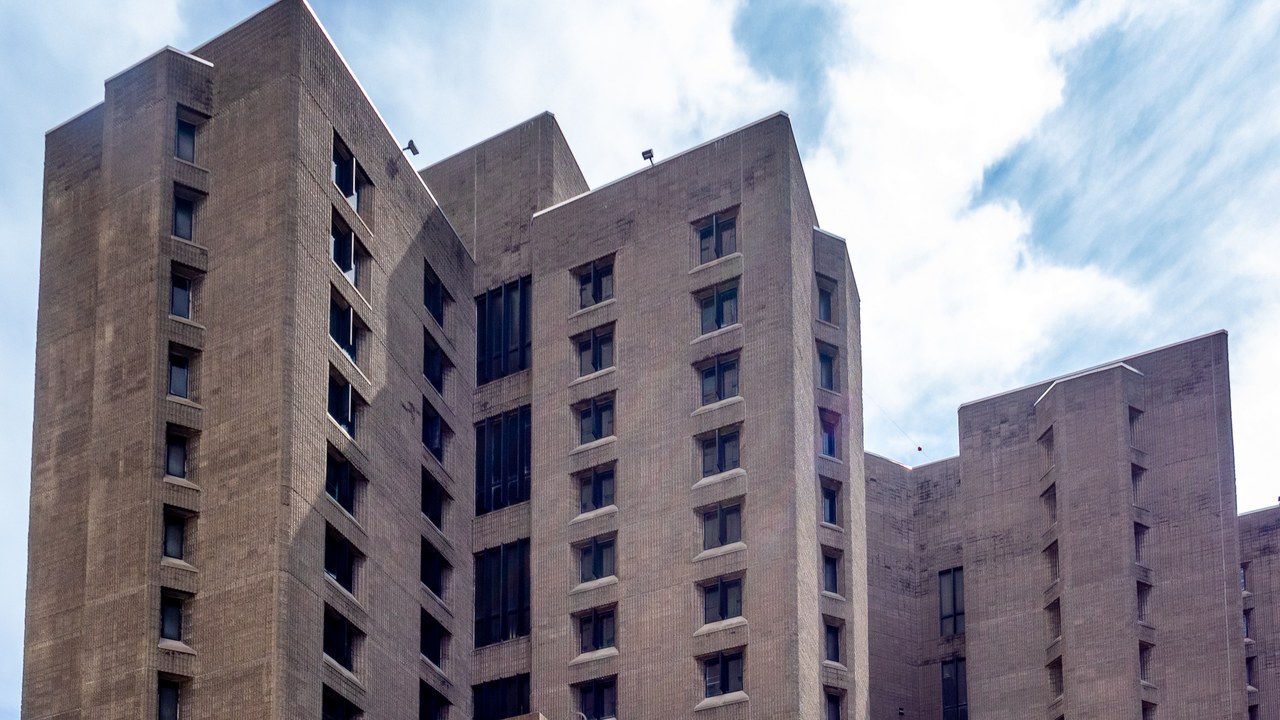
A leading forensic scientist says Jeffrey Epstein was murdered — strangled in his New York jail cell in 2019, not a suicide. But the New York City medical examiner's office says it stands by its ruling, and the new analysis has not been peer-reviewed.
Professor Michael Freeman, a professor of forensic medicine and editor-in-chief of the Journal of Forensic and Legal Medicine, spent a year reviewing Epstein's full autopsy file, including photographs from the medical examiner's investigation. He presented his findings in London on Monday evening and spoke about them to BBC Newsnight.
What The Expert Says
Freeman believes Epstein was strangled, most likely from behind, before his body was suspended from a bunk bed. He said the evidence was most consistent with strangulation using a ligature, and that the same ligature was probably then used to suspend the body. “The injuries and the way the body was found don't match up,” he told the BBC. “There's only one remaining explanation then, and that is that the death was as a result of a homicide.”
The evidence he points to comes from the medical examiner's own files and photographs: what appeared to be fingernail marks above the ligature mark on his neck, which Freeman said would be consistent with strangulation from behind as a victim tried to remove something tightening around the neck; a deep haemorrhage in his left shoulder; and injuries that appeared consistent with being struck in the face. He also noted that no photograph was taken of the body in its original position, and that the ligature said to have been used was not preserved or forensically compared against the neck wounds.
To test his reading, Freeman built a three-dimensional model of Epstein's neck wounds using body proportions and injury locations from the autopsy photographs, working with a cognitive neuroscientist and a forensic pathologist. He did not examine the body himself. When asked who might have killed Epstein, he said he had “no idea” and that it was not part of any investigation he had done.
Freeman, who holds doctorates in epidemiology and forensic medicine and has served as a cause-of-death expert to attorneys-general in the United States in death-in-custody cases, including George Floyd's, says his analysis is independent and that he was not paid by Mark Epstein, the brother who gave him the file and has always maintained his brother was murdered. His research has not been peer-reviewed, and Freeman says he intends to resubmit it after one journal rejected it.
Why The Official Ruling Stands
The New York City medical examiner's office told CBS News on November 16: “Our office stands by its determination.” Dr Barbara Sampson, the chief medical examiner at the time of the autopsy, has previously said: “I stand firmly behind our determination of the cause and manner of death for Mr. Epstein.”
The medical examiner who carried out the autopsy concluded in 2019 that Epstein's injuries were consistent with suicide and that there was no evidence of the defensive wounds expected if his death had been a homicide. That examiner later told the Justice Department's Office of the Inspector General that the injuries were more consistent with, and indicative of, a suicide by hanging rather than homicide by strangulation.
Two federal reviews have backed the ruling. A Justice Department inspector general's report in June 2023 documented serious failures at the jail — guards skipped every required count after 4 PM on August 9, 2019, and nearly all the cameras around Epstein's unit were not recording — but found no evidence that anyone else entered the locked cell or that a crime was involved. A Justice Department and FBI memorandum issued on July 7, 2025, again concluded that Epstein died by suicide.
Freeman is not the first expert to question the ruling. Dr Michael Baden, a pathologist hired by Mark Epstein who observed the autopsy, told 60 Minutes in January 2020 that he found fractures of the thyroid cartilage and the hyoid bone that he said he had not seen in a suicidal hanging. A New York Times investigation published in June 2026, which reviewed tens of thousands of pages of records, found indications that Epstein intended to take his own life.
THE STORY SO FAR
August 10, 2019 — Epstein is found unresponsive in his locked cell at the Metropolitan Correctional Center in New York at about 6:30 AM, while awaiting trial on federal sex-trafficking charges.
August 11, 2019 — The city's chief medical examiner rules the cause of death hanging and the manner of death suicide.
January 2020 — Dr Michael Baden, the pathologist hired by Mark Epstein to observe the autopsy, tells 60 Minutes the neck fractures he saw were not typical of a suicidal hanging.
June 2023 — The Justice Department inspector general reports serious failures at the jail — missed counts, cameras not recording — but no evidence of criminality.
July 7, 2025 — A Justice Department and FBI memorandum again concludes Epstein died by suicide.
November 2025 — Mark Epstein gives the full autopsy file to Professor Michael Freeman.
November 16, 2026 — Freeman presents his analysis in London and tells BBC Newsnight the death was a homicide; the medical examiner's office says it stands by its ruling.
WHAT HAPPENS NEXT
Freeman plans to resubmit his analysis to a peer-reviewed journal, and he has published his research and the medical examiner's files so others can check his work. University College London's Faculty of Laws, which hosted his presentation of the findings on November 16, highlighted the missing photographs as a major limitation of the original inquiry. No official body has changed the 2019 ruling.
What would change the picture is peer-reviewed publication, or an official re-examination of the evidence. Until one of those happens, the claim remains exactly that — a claim, however credentialed its author.
What Would Actually Settle It
Freeman himself flags the gaps that matter most: no photograph of the body in its original position, and a ligature that was never preserved or forensically compared with the neck wounds. Those are the pieces of evidence that could have answered the question in 2019, and they cannot be recovered now. Peer review is the other gate — until a journal accepts the analysis, it sits outside the scientific record. Readers should treat the claim as unproven, not as a new verdict.