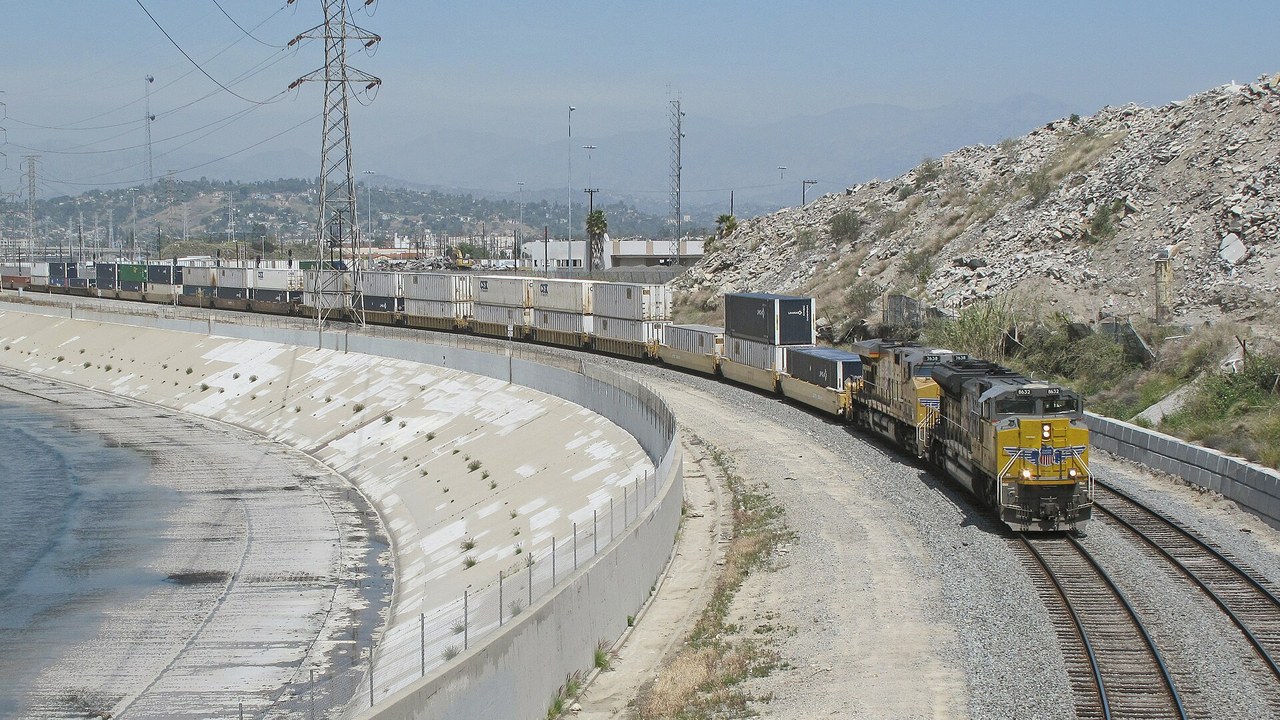
For two and a half years, freight trains rolling out of the ports of Los Angeles and Long Beach kept arriving light. Federal prosecutors now say they know why: a 21-year-old from East Los Angeles and a crew that included his father and two uncles were cutting the air hoses on moving trains, forcing them into emergency stops in the dark, then boarding the cars and hauling away Nike sneakers, Milwaukee power tools and electronics — more than $22.5 million of it, from at least 36 trains. On Thursday, November 19, federal agents arrested 13 of them. And the detail that turned a court filing into the day's most-shared crime story: the crew filmed themselves doing it.
The method was strikingly simple, and that is what made it work for so long. According to the indictment unsealed in Los Angeles, the crew picked its spots along the tracks in advance. When a train carrying high-value cargo reached a chosen location, members cut its air hoses, triggering an emergency stop. Others boarded the cars — sometimes while they were still moving — cut into the shipping containers, and loaded the goods into trucks and vans waiting nearby. The goods went to stash houses, including the defendants' own homes. The burglaries happened on tracks in Pico Rivera, Fullerton and other Southern California locations, and the crew coordinated the whole operation through Instagram messages.
Prosecutors say the operation was led by Nathan Daniel Angel, 21, of East Los Angeles. Working alongside him, according to the indictment, were his father, Daniel Angel, 38, known as “Rayo”, and his uncles Rodolfo Angel, 23, known as “Rudy” and “Flaco”, and Jose Luis Angel, 23, known as “Joe”. Ten more defendants were charged, ranging in age from 23 to 38. All 14 face one count of conspiracy, 14 counts of theft of interstate railroad cargo and possession of stolen cargo, and two counts of violence against railroad carriers The violence counts carry up to life in prison; conspiracy up to five years, each theft count up to ten.
The stolen goods had somewhere to go. The indictment says two of the defendants, Fredy Marquina and Carlos Luis Fernando Martinez, sold thousands of pairs of stolen Nike sneakers — many still in their original Nike factory cartons — to a Los Angeles sneaker and streetwear resale business identified only as “Company 1”. Between May and October 2025, the pair collected about $1,081,493 from that business for the stolen sneakers and other goods. Company 1, prosecutors say, was not an authorized Nike reseller, and it sold the stolen products on for a profit. Another defendant, Jorge Angel Aguilar Espinoza, advertised stolen goods on social media and sold them for a profit.
Federal officials also released video of the thefts — footage that appears to have been filmed by the crew members themselves. In the clips, men are seen sawing through cargo doors, grabbing boxes and flashing peace signs as they ransack the trains. It is the kind of evidence prosecutors rarely get to show on the day charges are filed — and a large part of why the story spread so fast. First Assistant U.S. Attorney Bill Essayli put the scale of it plainly: “The scale of the theft is staggering.”
The arrests followed a 14-month investigation led by Homeland Security Investigations, with the Los Angeles Police Department's Commercial Crimes Bureau, the Union Pacific Railroad Police Department, the California Highway Patrol's cargo theft unit and IRS Criminal Investigation. The containers they targeted enter the U.S. through the ports of Los Angeles and Long Beach, then travel by train for distribution nationwide — which is why the case was charged federally.
THE STORY SO FAR
February 2024: the scheme begins, according to the indictment. Nathan Angel starts targeting high-value trains travelling through Southern California, intending to steal the cargo and resell it on the black market.
May to October 2025: Marquina and Martinez sell thousands of pairs of stolen Nike sneakers and other stolen goods to Company 1, collecting about $1,081,493.
August 2026: the thefts stop, according to the indictment's window — the last of at least 36 burglarized trains.
Thursday, November 19, 2026: federal agents arrest 13 defendants in coordinated morning raids. The 17-count indictment is unsealed in Los Angeles, and the defendants are due to be arraigned that afternoon in federal court in downtown Los Angeles.
Friday, November 20, 2026: USA Today, Fox News and CNN carry the story, and the video released by federal officials spreads across social media.
WHAT HAPPENS NEXT
The defendants face arraignment and then the long road of a federal case — pretrial hearings, and, if no plea deal is reached, a trial in the Central District of California. If convicted, they face up to five years for conspiracy, up to ten years for each theft count, and up to life in prison for each count of violence against railroad carriers. Not yet public: prosecutors have not named Company 1, have not said whether it faces charges, and have not said how much of the $22.5 million was recovered — or whether the fourteenth defendant is in custody yet.
THE PART NOBODY HAS ANSWERED YET
Three questions hang over the case. First, who is Company 1 — the resale business that paid more than a million dollars for stolen sneakers — and will it be charged? Second, how much of the $22.5 million was recovered, and how much is already gone, sold on to buyers who may never know their sneakers were stolen? And third, how did a crew cutting brake hoses on moving trains operate for two and a half years before it was stopped? The indictment answers the how in detail. The answers to those three will come from the courtroom — and they are why this story is not over.
For now, the record is this: 14 charged, 13 arrested, at least 36 trains, $22.5 million in cargo, and a crew that filmed its own crime. The charges are allegations, and the defendants are presumed innocent until proven guilty. But the video, the indictment and the million dollars in sneaker sales are already on the public record — and that is why this story is not going away.