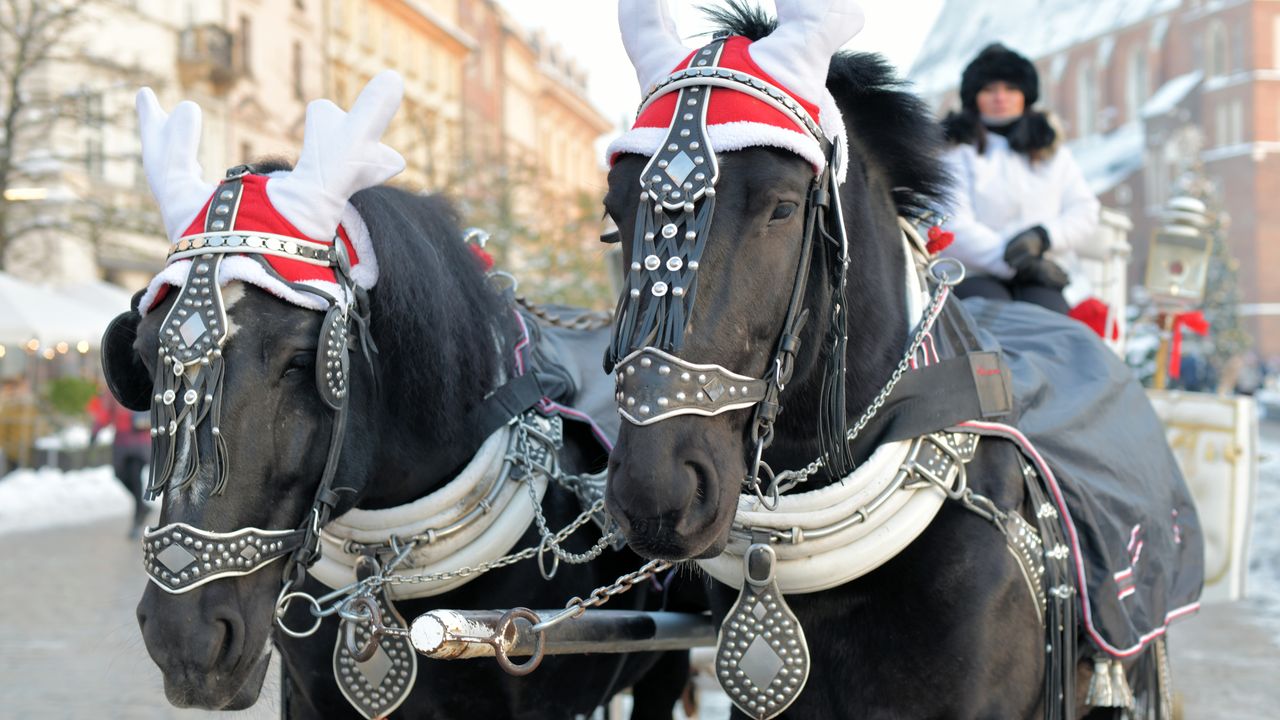
New York City's horse-drawn carriages have looped through Central Park since 1858 — past the Plaza Hotel, down Fifth Avenue, into a thousand movies and postcards. On Thursday morning, Mayor Zohran Mamdani signed the law that ends them. The carriages will keep running for now, but June 1, 2028, is their last day: no new licences will be issued, and every existing licence expires the day before.
Mamdani signed Romanch's Law — Intro 943 — in City Hall's Blue Room, flanked by Council Speaker Julie Menin and former Mayor Bill de Blasio, who campaigned for years to end the rides. "For generations, horses lived and worked here in New York City," Mamdani said at the news conference. "Our city has changed and now it is time for our laws to change too." He signed, he said, with "a deep sense of gratitude and obligation to the more than 200 New Yorkers who make up the horse carriage industry today."
The law does three things. It stops the city from issuing new horse-drawn cab licences. It ends all horse-drawn carriage operations on June 1, 2028 — the last licences expire May 31. And it writes the horses' retirement into law: they cannot be sold for slaughter or sold on to another carriage business, and the city's Department of Mental Health and Hygiene will oversee where each horse goes. The Animal Legal Defense Fund says it will help pay to transport the horses to safe, permanent homes.
The push to end the rides is decades old, but it turned this summer. In June, 18-year-old Romanch Mahajan, a tourist from India visiting New York with his family, was killed after being thrown from a carriage when the horse bolted — believed to be the first known human death linked to a Central Park carriage ride in the tradition's 160-plus years. The same month, a horse named Deniz collapsed in Central Park while pulling a carriage full of passengers. The law is named for Mahajan.
The incidents were not new. In 2022, an elderly, emaciated horse named Ryder collapsed and died on Ninth Avenue while pulling a carriage in brutal summer heat — the case that got the ban bill introduced in the first place. That same year, a poll found 71% of New York City voters favoured banning the rides. The Central Park Conservancy, which looks after the park, has called for the ban, and in September 2025 the city issued an executive order directing agencies to prepare for the carriages' end. Central Park draws more than 42 million visitors a year, and the carriages had become, in the city's own words, increasingly incompatible with it.
A 160-Year-Old Postcard
The carriages began in 1858, when they were simply how people got around. They outlived the horse-drawn era and became a tourist staple — the loop around the park's southern edge, the white gloves, the blankets in winter — and a fixture of the city's image, showing up in "30 Rock," "Sex and the City" and "Elf." New York is now the largest metro area in the United States to ban them. Philadelphia, Chicago and San Antonio have outlawed the practice in the last five years, and Biloxi and Key West did so before them.
The Drivers Are Suing
Not everyone is celebrating. The Transport Workers Union Local 100, which represents the carriage drivers, filed a lawsuit in federal court in Manhattan on Thursday, arguing the ban violates the Fifth Amendment by taking public property — the drivers' city-issued medallions and licences — without just compensation. "This bill is a train wreck of constitutional and due process violations," TWU International President John Samuelsen said in a statement. "It offers nothing concrete for blue-collar drivers and carriage owners who will be financially crushed, stripped of their jobs, their licenses, expensive city-issued medallions, small businesses and way of life. It is not progressive. It is anti-worker. It's theft."
The mayor's answer is a transition plan, due by April 2027, built with the workers' input at every step, in his words. It will include medallion buybacks for owners and a stipend for drivers and stable hands to attend workforce training and career development classes, plus career counselling and entrepreneurial support. The law also requires the city's Department of Consumer and Worker Protection to run a workforce development programme to help drivers and other carriage workers move into other fields.
If You're Visiting New York
Nothing changes for visitors tomorrow. The carriages will keep running — with no new licences issued, the fleet can only shrink — until the last ride on May 31, 2028. If a Central Park carriage ride is on your list, you have 19 months, and the rides are busiest on the park's southern loop near Fifth Avenue and 59th Street. After June 2028, the pedicabs, bike rentals and walking tours that already work the same loop will be the way to see the park from a seat. And if you are wondering where the horses go: the city has to account for every one of them, and the law forbids the two outcomes campaigners feared most — slaughter, or a sale to another carriage trade.
THE STORY SO FAR
1858: horse-drawn carriages begin operating in Central Park. 2022: Ryder, an elderly horse, collapses and dies on Ninth Avenue in summer heat; the ban bill is introduced, and a poll finds 71% of New Yorkers favour a ban. September 17, 2025: the city issues an executive order directing agencies to prepare for the carriages' end. June 2026: Romanch Mahajan, 18, is killed after being thrown from a runaway carriage, and a horse named Deniz collapses in Central Park. October 22, 2026: the City Council passes Romanch's Law 40-7, with two members abstaining. November 19, 2026: Mayor Mamdani signs the law, and the drivers' union sues the same day.
WHAT HAPPENS NEXT
The lawsuit comes first. A federal judge in Manhattan will decide whether the ban can stand while the case runs — and whether the drivers' medallions count as property the city must pay for. The transition plan lands by April 2027, when owners learn what their medallions are worth and drivers learn what training and stipends they get. The horses' placements will be arranged in the meantime, with the city overseeing each one. And on June 1, 2028, the loop that has run since 1858 stops — unless a court stops the law first.