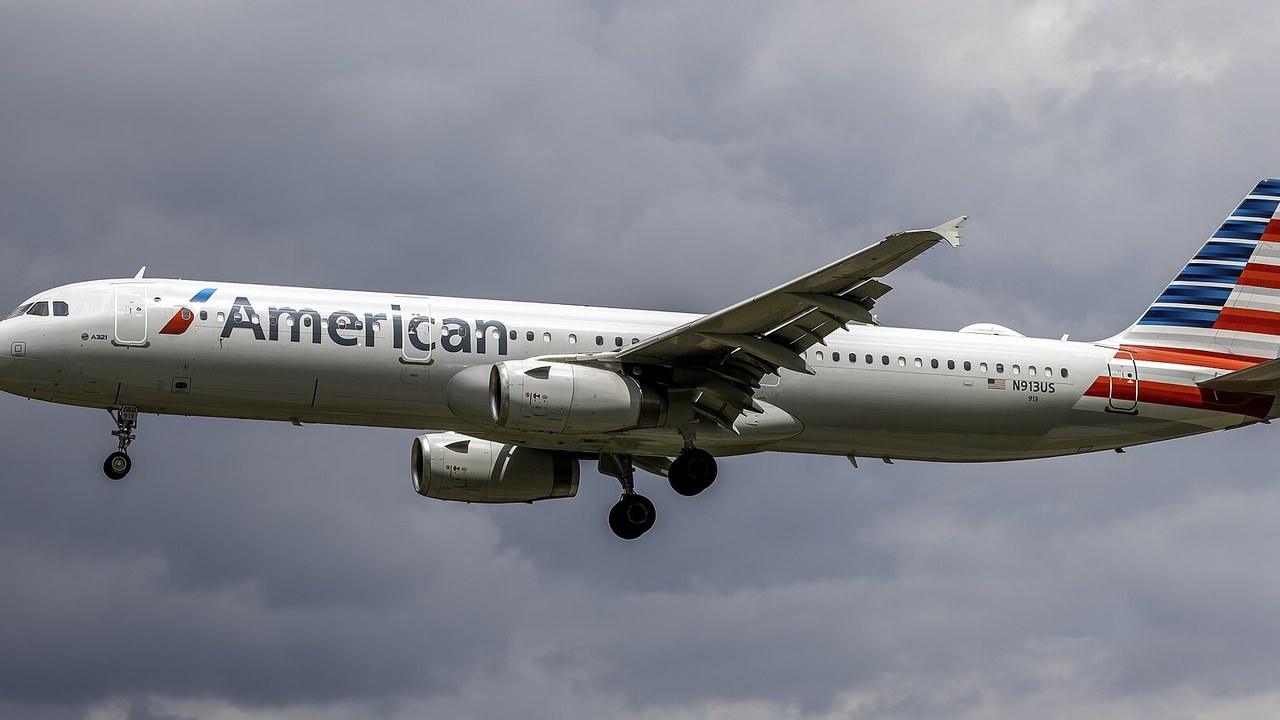
A man on an overnight American Airlines flight from San Diego to Chicago tried to open a cabin door while the plane was in the air early on Wednesday — and the plane made an emergency landing in Phoenix after passengers and crew held him down on the cabin floor.
American Airlines Flight 1494 left San Diego at 10:53 p.m. Pacific time on Tuesday, November 24, bound for Chicago O’Hare. About an hour into the flight, while the Airbus A321 was flying near the Arizona–California border south of Needles, California, a male passenger left his assigned seat and walked to the front of the cabin. Phoenix police say he repeatedly refused the crew’s instructions to return to his seat and “attempted to manipulate an aircraft door.” Crew members and several passengers restrained him and held him on the floor until the plane could land.
The captain diverted to Phoenix Sky Harbor International Airport, where the plane landed safely at about 1 a.m. local time on Wednesday, November 25. Law enforcement officers met the aircraft at the gate, removed the man, and took him to a hospital for evaluation after what police described as a minor injury sustained during the struggle. Nobody else on board was hurt. The flight later continued to Chicago, departing Phoenix at about 5:52 a.m. and landing several hours behind schedule.
A passenger on the flight, Sean Bennett, posted on Facebook as the drama unfolded: “So first leg of my flight, AA1494 San Diego to Chicago someone tried to take over the plane. We are emergency landed in Phoenix. Several strong heroes took him down. We are safe.” Air-traffic audio relayed to news outlets described the situation on board as a “Level 3 threat,” the category used for serious security concerns.
American Airlines said the flight “diverted to Phoenix (PHX) due to a disruptive customer” and that “upon arrival, law enforcement met the aircraft and assisted with deplaning the customer before the flight continued to its destination.” The FAA said the crew reported a passenger disturbance, the plane landed safely, and the agency will investigate. Phoenix police said the FBI has been notified and will review the officers’ reports. As of Thursday morning, authorities had not announced any charges or named the passenger.
The incident landed in the middle of the busiest Thanksgiving travel week in years. The FAA expects about 417,000 flights over the nine-day holiday period, and American’s hubs have been running at full stretch — which is why a diversion in the middle of the night ripples into the morning: the same aircraft and crew were due onward, and every delayed departure pushes the next one back. It is also why the FAA’s number matters: more than 1,500 unruly passenger incidents reported in 2026 alone, a reminder that the crew on Flight 1494 were dealing with a problem the industry sees several times a day.
THE KEY NUMBERS
10:53 p.m. — Flight 1494 departs San Diego on Tuesday, November 24.
1 a.m. — the emergency landing in Phoenix on Wednesday, November 25.
5:52 a.m. — the flight resumes toward Chicago, hours behind schedule.
1,500+ — the unruly passenger incidents the FAA says US airlines have reported so far in 2026.
0 — other passengers or crew members hurt. The man himself had a minor injury.
Level 3 — the threat category air-traffic audio used for the incident, the level reserved for serious security concerns.
COULD THE DOOR ACTUALLY HAVE OPENED?
No — and that is the part of the story that gets lost in the panic. At cruising altitude, the cabin is pressurised, and the pressure difference holds a plug-type cabin door shut with thousands of pounds of force. Commercial aircraft doors are designed so they cannot be opened in normal pressurised flight, however hard someone pulls. That does not make the attempt harmless: the FAA treats any interference with a door or exit as a serious safety issue, the crew had no way of knowing in the moment what the man intended, and interfering with a flight crew is a federal offence that can bring fines and prison time. The diversion was the right call — the only argument is whether it should have happened even sooner.
THE STORY SO FAR
Tuesday, November 24, 10:53 p.m. — Flight 1494 leaves San Diego for Chicago O’Hare.
About an hour later — near the Arizona–California border, a passenger leaves his seat, walks to the front of the cabin and refuses to sit down.
Minutes later — the man attempts to manipulate a cabin door. Crew and passengers restrain him on the cabin floor.
Wednesday, November 25, about 1 a.m. — the plane lands in Phoenix. Police meet it at the gate and remove the man, who is taken to hospital with a minor injury.
Wednesday, 5:52 a.m. — the flight departs Phoenix for Chicago, landing several hours late.
Thursday, November 26 — the passenger remains unnamed, no charges have been announced, and the FBI and FAA are reviewing the case.
WHAT HAPPENS NEXT
The FBI will review the Phoenix police reports and decide whether the case becomes a federal one — interfering with a flight crew and attempting to interfere with an aircraft door are both federal matters, and the FAA can also fine the passenger. American Airlines has not said whether the man will be banned from its flights, and that decision usually follows the investigation. For everyone else flying this Thanksgiving, the lesson is the one the FAA repeats every holiday: if a passenger near you becomes disruptive, tell the crew and let them handle it — and if you are the one who ends up holding someone down on the cabin floor, as several passengers on Flight 1494 did, the airline and the law will both be on your side.