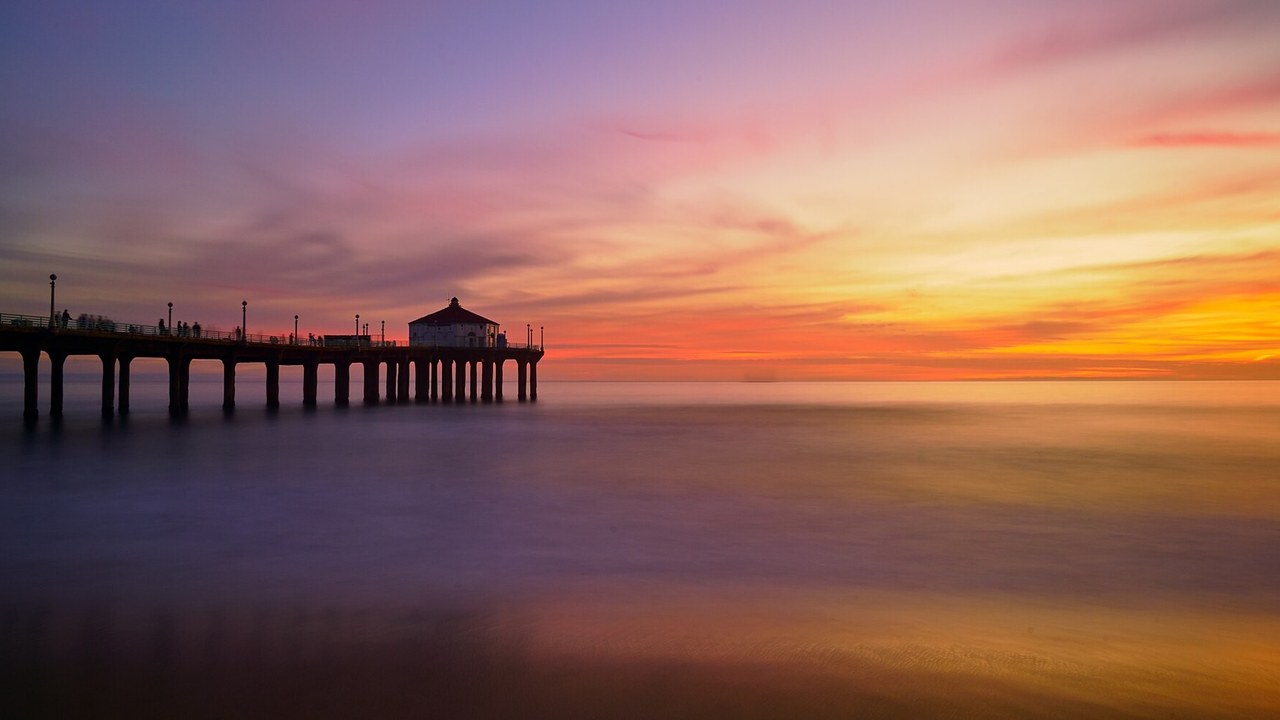
A magnitude 5.0 earthquake struck off the coast of Los Angeles on Saturday morning, shaking the city from Santa Monica to Pasadena. The quake hit at 9:30 AM Pacific time, about 3.7 miles west-southwest of Manhattan Beach, according to the U.S. Geological Survey. Within an hour, “earthquake now” was the top trending search in the United States, with more than a million searches.
The shaking sent people running out of stores in Santa Monica, rattled buildings loudly and swayed trees, and knocked ceiling tiles from the ceiling inside a terminal at Los Angeles International Airport. The first official word from the city was reassuring: no initial reports of structural damage or injuries, no tsunami danger, and the Rose Bowl game still on for Saturday afternoon.
It is the second earthquake off Manhattan Beach in six days — a magnitude 3.3 struck the same stretch of coast on Sunday, November 22 — and the third Los Angeles-area quake in eight days, after a 4.4 near Commerce woke the city on Friday, November 20. This one is the biggest of the three by a wide margin.
WHAT A 5.0 ACTUALLY MEANS — THE SHAKING MATHS
A magnitude number on its own tells you almost nothing about what a quake feels like. The numbers around this one tell the story. A magnitude number on its own tells you almost nothing about what a quake feels like. The numbers around this one tell the story. The epicenter sat 3.7 miles offshore, and the quake broke 7.6 miles underground — deep enough that the shaking at the surface was softer than a shallow quake of the same size would have produced. “Because this event was down at 12 kilometers depth, that gives you a little bit farther distance for those waves to travel up to the surface and cause shaking,” USGS seismologist Elizabeth Cochran said at a briefing. Allen Husker, manager of the Southern California Seismic Network, agreed: deep and offshore meant less shaking and less damage.
The reach still tells you how big it was: shaking was felt in Pasadena, about 27 miles northeast of the epicenter — roughly seven times farther inland than the epicenter is offshore. The USGS ShakeMap put the strongest shaking at intensity V, moderate, and its PAGER system gave the quake a GREEN alert — its lowest impact level. Early readings ranged from 4.7 to 5.2 before the agency settled on a reviewed magnitude of 5.0. Seismologist Lucy Jones called it one of the larger quakes the Los Angeles area has had in quite a while: the 2014 La Habra earthquake, a magnitude 5.1 near Brea, was the last time the Los Angeles metropolitan area broke 5.0 — more than 12 years ago.
THE AFTERSHOCK CLOCK
At least four aftershocks, ranging from magnitude 2.5 to 3.7, followed within the first 45 minutes, according to the USGS. A magnitude 3.0 struck near Hermosa Beach at 9:34 AM, four minutes after the mainshock; a smaller one followed near Manhattan Beach minutes later; and a magnitude 3.5 was recorded at 10:01 AM. The USGS estimates a 30 percent chance of an aftershock of magnitude 4.0 or greater — roughly a one-in-three chance a bigger jolt is still coming. The California Office of Emergency Services put it plainly: “Earthquakes are unpredictable, so be prepared for aftershocks.”
WHAT IT LOOKED LIKE ON THE GROUND
At LAX, CNN’s Sara Sidner reported the terminal started shaking and tiles fell from the ceiling as alarms rang out inside the airport — video she shared showed tiles dropping to the floor. In Santa Monica, CNN’s Brad Parks reported buildings rattling loudly and trees swaying as people ran out of stores. The shaking reached the Rose Bowl in Pasadena, where the press box rattled on the morning of the USC-UCLA rivalry game — a game that decides whether No. 9 UCLA clinches a Big Ten Championship Game spot. The Rose Bowl said all lanes were open on Interstate 210 toward the stadium, and the game was still on.
THE KEY NUMBERS
Magnitude: 5.0 (reviewed), after early readings of 4.7 to 5.2. Time: 9:30:29 AM PT, Saturday, November 28, 2026. Epicenter: 3.7 miles west-southwest of Manhattan Beach. Depth: 7.6 miles. Strongest shaking: intensity V; PAGER alert GREEN. Aftershocks: at least four in the first 45 minutes, magnitude 2.5 to 3.7. Chance of a magnitude 4.0 or greater aftershock: 30 percent. Felt as far as: Pasadena, about 27 miles away. Last Los Angeles-area quake above 5.0: the 2014 La Habra quake, magnitude 5.1, more than 12 years ago. Damage and injuries reported so far: none major.
THE STORY SO FAR
Saturday, November 28, 9:30 AM PT — a magnitude 5.0 earthquake strikes about 3.7 miles off Manhattan Beach at a depth of 7.6 miles; early USGS readings range from 4.7 to 5.2. Shaking is felt across the Los Angeles basin; people run out of stores in Santa Monica; ceiling tiles fall inside a terminal at LAX. 9:34 AM — a magnitude 3.0 aftershock strikes near Hermosa Beach; a smaller one follows near Manhattan Beach. 10:01 AM — a magnitude 3.5 aftershock is recorded. Late morning — the Los Angeles Fire Department reports no initial reports of structural damage or injuries and goes into earthquake mode, with all 106 neighborhood fire stations surveying their districts by land, air and sea. Mayor Karen Bass says there are no reports of major damage. The National Tsunami Warning Center says there is no tsunami danger. Early afternoon — “earthquake now” passes a million searches in the United States; the USGS settles on a reviewed magnitude of 5.0.
WHAT HAPPENS NEXT
The Los Angeles Fire Department’s survey is still running — all 106 neighborhood fire stations are checking their districts, so the damage picture could still change, and this article will be updated if it does. The aftershock watch is the live question: the USGS puts the chance of a magnitude 4.0 or greater aftershock at 30 percent, so anyone in the Los Angeles area should expect more shaking — drop, cover and hold on during a jolt, and stay clear of damaged buildings afterward. The USC-UCLA game at the Rose Bowl goes ahead on Saturday afternoon. The USGS called the 5.0 a potential mainshock in a sequence — which is why the aftershock clock matters more than the headline number.