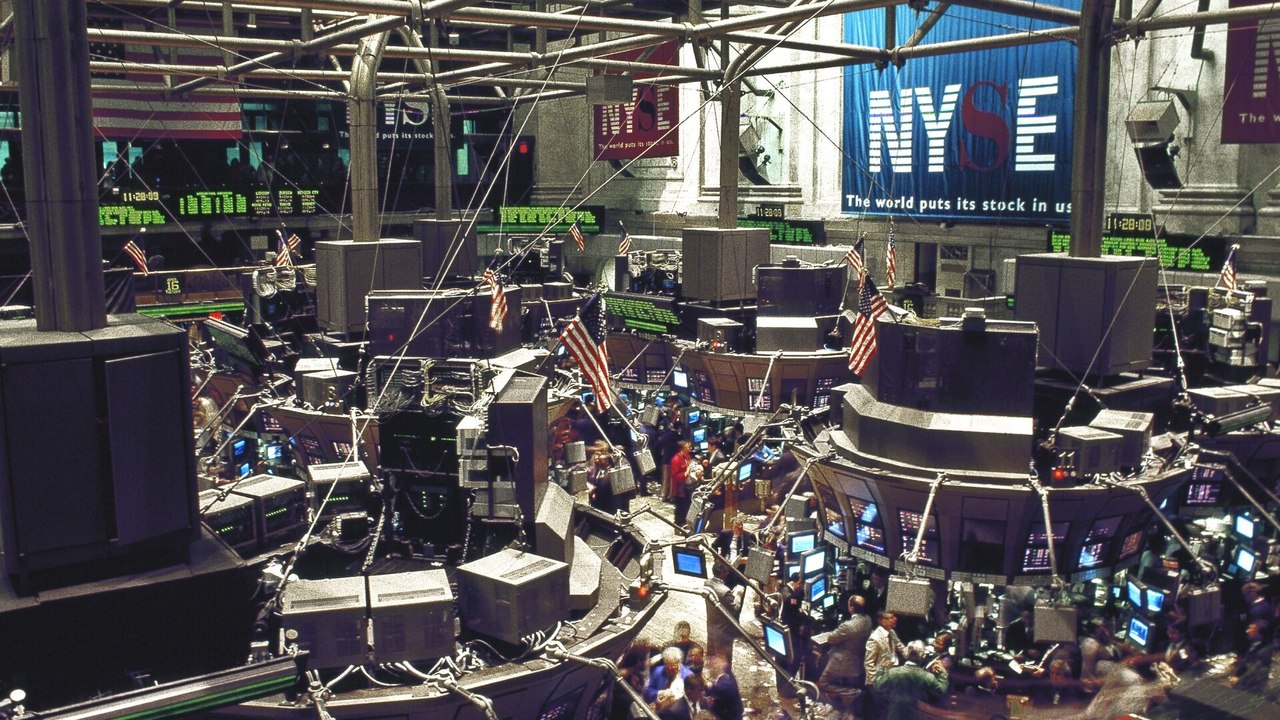
The S&P 500 fell 3.6% on Friday, its seventh straight daily loss — the longest losing streak since February 2020 — and both the S&P 500 and the Dow Jones Industrial Average slid into correction territory, down 10% from their recent peaks. The Nasdaq fell harder, dropping 5.3% and wiping out every gain it had made in 2026.
The Dow retreated 1.85% on the day, cushioned by gains in defensive corners of the market such as healthcare and consumer staples, but it still joined the S&P below the correction line — the Dow is now 10% below its August 5 peak, the S&P 10% below its October 6 peak. The Nasdaq, which had already slipped into correction earlier in the week, is now down about 2% for the year. All three indexes are on track for their worst week since early April 2025, when President Donald Trump's tariff plans rocked global markets.
THE KEY NUMBERS
S&P 500: down 3.6% on Friday; 10% below its October 6 peak; seventh straight daily loss, the longest streak since February 2020.
Dow Jones: down 1.85% on Friday; 10% below its August 5 peak.
Nasdaq Composite: down 5.3% on Friday; down about 2% so far in 2026; down 18% from its record closing level.
Anthropic (ANT): down almost 10% on Friday to about $87.10 — just above its $83 IPO price — a day after MythPost reported its 11% drop on day two.
Nvidia: down 20% this week, its worst week since November 2018; down more than 40% from its October 6 peak, losing $2.5 trillion in market value.
VIX, Wall Street's fear gauge: jumped to 33 this week, its highest in 19 months, up from 19.3 last Friday.
CoreWeave: down 12% on Friday, back to its $40 IPO price from March 2025.
WHY THE SELL-OFF DEEPENED
The trigger is the same trade that carried the market up: artificial intelligence. Stocks tied to the AI buildout have been sliding for weeks, and Anthropic's blockbuster IPO — the debut that was supposed to steady nerves — did the opposite. Its shares soared 34% on day one, then fell 11% on day two, and plunged again on Friday. With the IPO in the rear-view mirror, traders' doubts about the whole AI trade came back to the front.
Investors are asking a harder question about the hundreds of billions of dollars companies are pouring into data centers and AI infrastructure — much of it raised through debt and equity — and getting more serious about demanding evidence of a return. “The market was already questioning some of the cost-benefit analysis … and you're coming off of relatively euphoric levels,” Steve Sosnick, chief strategist at Interactive Brokers, told CNN. “There is a real exodus out of tech stocks. Buy the dip has been taking a back seat to sell the rally — or just sell.”
Two other worries are hanging over the market. One is uncertainty over Nvidia's role in powering the AI industry's growth after CEO Jensen Huang resigned — MythPost reported this week that Huang is weighing a comeback as his allies push for his return. The other is uncertainty over how newly elected Democratic governors will affect the pace of the data-center buildout. “It's a meltdown right now,” Arun Sundaram, senior vice president of investment strategy at CFRA Research, told CNN. “So much bearish sentiment around tech and AI.”
WHAT A CORRECTION ACTUALLY MEANS
A correction is Wall Street's term for a 10% fall from a recent peak. It is not a crash, and it is not rare — strategists point out that corrections are a normal part of bull markets. “This is not a fatal illness. It's not even the flu. At the moment, it looks like a mild cold, and it should be over in a week or two,” David Kelly, chief global strategist at JPMorgan Asset Management, told CNN.
Friday also showed the market's defensive reflexes working. Investors piled into U.S. Treasury bonds, which rallied sharply, and classic defensive sectors — consumer staples and healthcare — advanced even as tech fell. Tech valuations, meanwhile, have compressed fast: the forward price-to-earnings ratio of the S&P 500's information-technology sector entered Friday at its lowest since March 2020, according to FactSet, and Nvidia's forward P/E is the lowest since 2002. That has some strategists suggesting the fear may be overdone — though nobody on Wall Street is calling a bottom yet.
THE STORY SO FAR
October 6, 2026 — The S&P 500 hits its record peak. Nvidia peaks the same day.
November 16, 2026 — The Nasdaq falls 2.5% into correction territory as Nvidia slides again.
November 18, 2026 — Nvidia reports $115.8 billion in revenue and beats expectations; the stock jumps after hours, but the relief does not last the week.
November 19, 2026 — Anthropic's stock opens 34% above its $83 IPO price and hits a $2 trillion value on day one.
November 20, 2026, morning — Anthropic drops 11% on day two, sliding back toward its IPO price; the S&P 500 is on its sixth straight daily loss.
November 20, 2026, afternoon — The S&P 500 falls 3.6% and the Dow 1.85%, both crossing into correction territory; the Nasdaq drops 5.3% and wipes out its 2026 gains; the VIX jumps to 33.
WHAT HAPPENS NEXT
The closing bell will confirm the numbers, and Monday's open is the next test: whether buyers step back in after a week that erased the Nasdaq's gains for the year, or whether the AI sell-off has further to run. The two questions hanging over the market have not changed — when the hundreds of billions in AI spending starts showing returns, and who leads Nvidia next. Both will be answered in the open, one earnings report and one headline at a time. This story will be updated as the market closes and the final numbers land.
For now, the scoreboard is blunt: two of the three major indexes are in correction, the third has given back its year, and the fear gauge is at a 19-month high. The market has been here before — corrections are, as JPMorgan's Kelly puts it, inevitable — but Friday was the day the AI trade's long winning run finally broke in public.