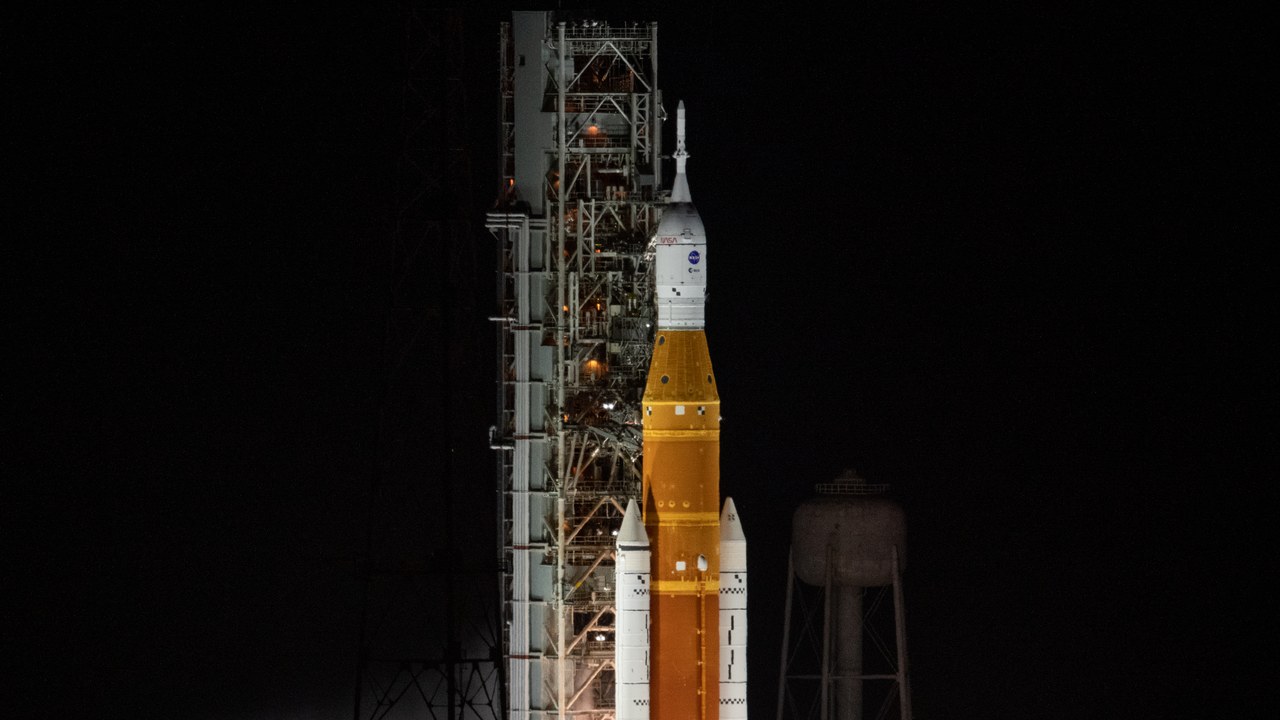
SpaceX's Starship lifted off from Texas on Friday evening on the most ambitious flight in the program's history — and by the time the night was over, it had put 26 new satellites into orbit and set up a first-of-its-kind landing attempt scheduled for Saturday afternoon.
Flight 15, as SpaceX calls it, launched at 5:47 p.m. ET on Friday, November 13, from Orbital Launch Pad 2 at Starbase, Texas. It is the 15th test flight of Starship, the tallest, heaviest and most powerful rocket ever flown, and the fourth flight of the upgraded Starship V3.
The window opened at 4:45 p.m. Central Time, and the rocket left the pad two minutes later, climbing into a darkening Texas sky. It was the second Starship launch to carry a real payload into a stable orbit, and the first to attempt the double catch that SpaceX has been working toward since the program began.
26 Satellites, One Big Payload
The flight's first job was the payload: 26 Starlink V3 satellites, the newest generation of SpaceX's internet satellites. Deployment began about 35 minutes after liftoff, and by 7:09 p.m. ET SpaceX confirmed all 26 were out and in contact. Each V3 satellite adds a terabit per second of capacity to the Starlink network — SpaceX says the 26 together equal about 10 launches' worth of the older V2 Mini satellites on its Falcon 9 rocket.
Three of the 26 carry cameras, not for looking at Earth but for looking back at Starship itself: they are there to scan the ship's heat shield and send imagery down to operators, part of the long effort to make the ship reusable.
It is only the second Starship flight to deploy satellites into a stable orbit, and the first to do it with the V3 design. If the satellites check out over the next few weeks, SpaceX says they could start serving customers soon after.
The satellites matter too. Starlink is SpaceX's internet network, and the V3 generation is designed to carry far more capacity per satellite than the ones before it. A single Starship flight carrying 26 of them is the kind of scale the network needs — and the kind of scale only a rocket this big can deliver.
One Catch Made, One Missed
The plan was to catch both stages: the Super Heavy booster, minutes after liftoff, and the Starship upper stage, about 22 hours later, both in the launch tower's giant arms. It was the first time SpaceX had ever attempted to catch both stages of the world's largest rocket on the same flight.
The booster catch did not happen. After hot-staging and the boost-back burn, SpaceX diverted Super Heavy to an offshore splashdown in the Gulf instead of bringing it back to the tower. The ship, meanwhile, did its part: Ship 42, the upper stage SpaceX has nicknamed 'Don't Panic,' entered orbit about 275 kilometers up and settled in for a long coast around Earth.
The booster diversion was a reminder of how the plan works. SpaceX only commits to a catch when flight control confirms the systems for reentry, the landing burn and the tower approach are healthy. If anything looks off, the booster goes to the ocean instead. On Friday, something looked off, and the ocean is where it went.
The ship is expected to circle the planet about 14 times over more than 22 hours, then fire a single Raptor engine to come home, reenter over the Pacific, glide across northern Mexico and southern Texas, and be caught by the same tower's arms — at about 3:19 p.m. Central Time on Saturday. Elon Musk has put the odds of that catch at 50 to 60 percent.
Why This Flight Matters
Starship is the rocket NASA is counting on to land astronauts on the Moon, and the one SpaceX is counting on to carry people to Mars. Both of those jobs need a ship that can fly, come home, and fly again — which is why the catch matters more than the satellites. A rocket that can be caught can be reused; a rocket that can be reused can fly often enough to make those missions affordable.
Flight 15 is also a test of the new V3 hardware. The booster that flew, Booster 22, is the first Super Heavy V3 built to return to the launch site for a catch, and the ship carries the upgraded heat shield the V3 design depends on. Every part of the flight — the deployment, the long coast, the return — is a data point for the next one.
SpaceX has caught a Super Heavy booster before; it has never caught a ship returning from orbit. Saturday's catch attempt, if it goes ahead, will be watched the way the first booster catch was: as the moment a science-fiction idea becomes routine engineering.
For now, the ship is still up there, circling the Earth every 90 minutes or so, with its heat shield healthy and its 26 satellites spreading out behind it. Saturday afternoon will decide whether the flight ends with the catch SpaceX has been building toward — or with a splashdown, and another try next time.