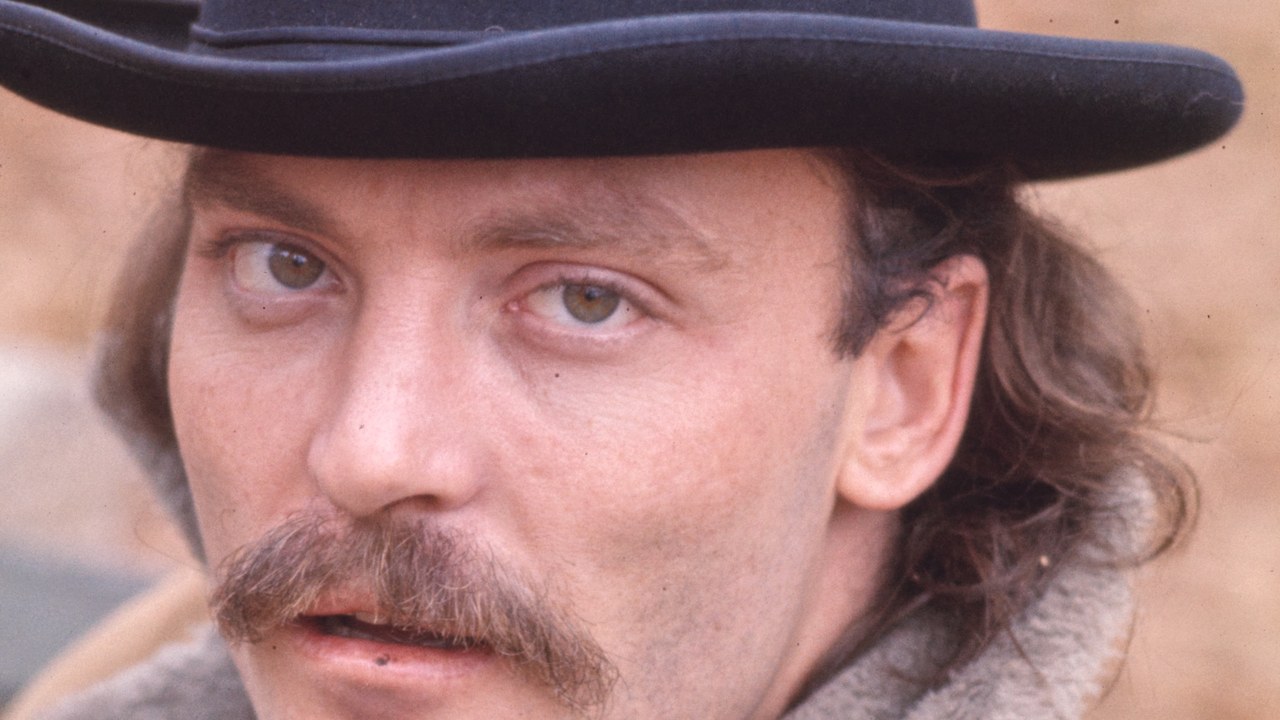
Stacy Keach, the actor whose craggy face and gravel voice carried him from Shakespearean stages to television's most famous private eye, has died. He was 85.
Keach died on Tuesday, November 10, at his family home in Magdalenka, Poland, after a long and difficult battle with a serious heart condition and heart failure, his wife, Małgosia Tomassi Keach, announced. They had been married for 40 years. His death was confirmed to Variety and The Hollywood Reporter, and tributes from across film, television and theatre followed within hours.
Mike Hammer Made Him A Star
Keach became famous as Mickey Spillane's hard-boiled private detective Mike Hammer, a role he played on CBS through the 1980s and returned to again and again. The part fit him like the trench coat: a tough, weary, funny detective who solved cases with his fists as often as his brain, and Keach played him with a wink that kept the violence from turning grim.
He had already made his name in film by then. His breakout came in 1972 with Fat City, John Huston's boxing drama, in which Keach played a washed-up fighter chasing one last shot — a performance that announced a serious film actor. He went on to appear in The New Centurions, Up in Smoke, American History X, The Bourne Legacy and Nebraska, and he won a Golden Globe for playing Ernest Hemingway in the television miniseries Hemingway.
The Hemingway role showed what he could do with a real life. Keach played the writer in his later years, capturing the bluster and the sadness, and the performance won him a Golden Globe. It was one of several times he played men larger than life — generals, priests, wardens, detectives — and made them feel smaller, sadder and more human than the legend allowed.
A Career That Never Stopped
What set Keach apart was range, and stamina. He was a classical stage actor who played Hamlet and King Lear, and a television regular who turned up everywhere: Touched by an Angel, The Simpsons — where he voiced characters for years — Will & Grace, Two and a Half Men, ER, NCIS: New Orleans and The Blacklist. In Prison Break he was Henry Pope, the prison warden whose decency made him one of the show's most loved characters. In Blue Bloods he played Cardinal Kevin Kearns, a role he held from 2016 to 2024. In the sitcom Titus he played Ken Titus, the bombastic father.
He was, by every account, a working actor in the best sense: never the biggest star in the room, always the one you remembered. Directors kept hiring him because he arrived prepared, knew his lines, and brought a weight to small parts that made them feel like leading roles.
He kept working into his eighties. His final film role came in 2025, in Noah Baumbach's Jay Kelly, where he played the father of George Clooney's movie-star character, arriving at an Italian tribute to his son. Clooney spoke warmly about working with him, calling him 'really exciting' and 'really sweet and funny,' and urging viewers to look up the breadth of his credits.
Animation gave him a second audience. Keach voiced Skipper Riley in Pixar's Planes, first in the short Air Mater and then in Planes and its sequel, and his distinctive voice became familiar to a generation of children who never saw Mike Hammer. Comedian Dane Cook, who worked with him on Planes, was among the first to pay tribute, writing: 'RIP Stacy Keach who I had the good fortune of meeting and working with on Disney's Planes. What an illustrious career.'
The Stage Was Home
Before the cameras, there was the stage, and Keach never really left it. He trained as a classical actor and built his reputation in Shakespeare, playing the great roles — Hamlet among them — with a physical, unmannered style that critics admired. It was the foundation everything else was built on: the voice, the stillness, the sense that he had lived a little more than the character he was playing.
His voice was part of it. Deep, rough, a little amused, it could carry a threat or a joke with the same ease, and it kept him employed in narration and voice work long after many of his contemporaries had retired. On The Simpsons, he voiced authority figures — the kind of men he had spent a career playing, now drawn in yellow.
He also survived the kind of trouble that ends careers. In 1984 he was imprisoned in Britain after being caught trying to smuggle drugs into the country, an episode he later spoke about openly. He came back from it the way he came back from everything: by working, steadily, for another four decades.
Keach is survived by his wife, Małgosia. He leaves behind a body of work that runs from Shakespeare to sitcoms, from boxing rings to prison wards, and a face — hat on, eyes narrowed — that a generation of viewers could recognize in a single frame.
The tributes that followed his death kept coming back to the same word: illustrious. Not famous, not beloved, though he was both — illustrious, the word for a career that covered everything and lasted longer than almost anyone else's. Seven decades in the business, hundreds of credits, and a final bow in a film about a movie star saying goodbye. He could not have written it better himself.