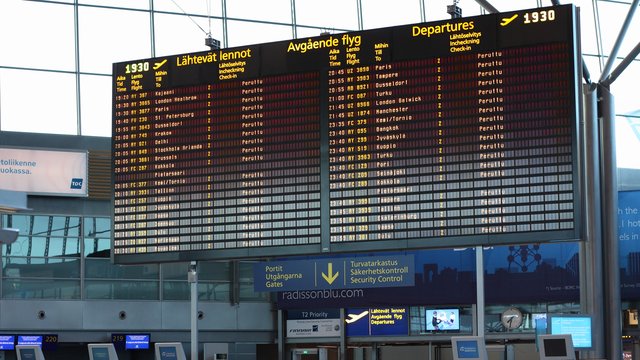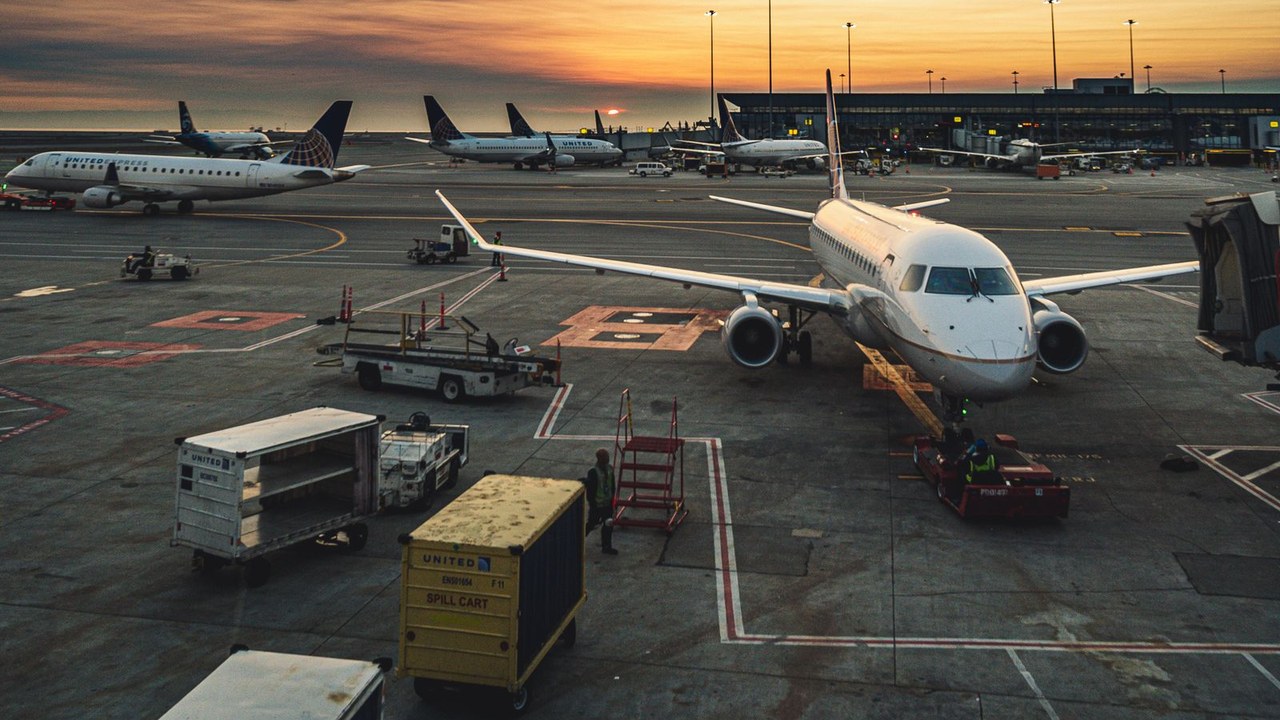
For more than four hours on Friday, America stopped flying. The Federal Aviation Administration lifted its nationwide ground stop on Friday evening, around 8:15 p.m. ET, ending a shutdown that had ordered every departing flight in the country to stay on the ground.
The order went out just before 4 p.m. ET, when the FAA's Air Traffic Control System Command Center told operators that all airports were ground-stopped “due to extraordinary circumstances and for reasons of safety.” Planes already in the air were allowed to keep flying to their destinations. Nothing on the ground was allowed to leave.
A Communications Failure At Every Control Center
Transportation Secretary Sean Duffy said the stop followed “a communication issue impacting all Air Route Traffic Control Centers.” In a 4:16 p.m. post, he said FAA technicians were investigating. Homeland Security Secretary Markwayne Mullin later told reporters outside the White House that a “telecommunication outage throughout FAA” was behind the stoppage. Flightradar24 reported the order followed an equipment outage, and the FAA's advisory also cited frequency issues across the National Airspace System.
Officials were quick to say what it was not. Mullin said there was “no prior indication as of yet that this was nefarious attack against us” and stressed the outage was “just a telecommunication outage as of right now.” “We're wanting to assure all the American people, this isn't a safety (threat) to the American people or another 9/11,” he said. “There's no reason for the public to be afraid or scared for your loved ones.” When asked whether an AI software rollout could be behind it, Mullin answered: “We cannot rule anything out. ... We are looking into it.” Microsoft, whose own worldwide outage stabilized Friday after more than 24 hours, said it had “no indication” the ground stop was related to its services.
10,000 Delays, 3,000 Cancellations — And Counting
The numbers piled up fast. By 6:40 p.m. ET, FlightAware counted more than 10,000 delayed flights and more than 3,000 cancellations across the country. For comparison, there were about 1,000 cancellations on Thursday and roughly 100 on each of Tuesday and Wednesday. Chicago O'Hare led the cancellation count with 173, followed by LaGuardia with 143, Dallas-Fort Worth with 132, New York's JFK with 113 and Boston Logan with 104.
The disruption spilled beyond America's borders. U.S.-bound departures from 42 countries — including the United Kingdom, France, Germany, Italy and Spain — were suspended at the FAA's request between 5 p.m. Friday and midnight ET, according to an advisory from Eurocontrol, the European air traffic management organization. Some international flights were cleared to leave from East and West Coast airports from around 5:45 p.m., and the FAA began a phased release as individual facilities recovered, but most departures stayed held for hours.
At the airports, the mood was stranded patience. At Newark, passengers gathered around gates trying to figure out what to do with checked luggage, many on the phone making backup plans. Louise Maher, 47, told Reuters she was still hoping to make her British Airways flight to London on Friday night. In Detroit, a family heading to New Zealand to see a dying brother learned their trip was pushed to Sunday. In Boston, hundreds of JetBlue passengers waited in line to rebook.
College Football Thrown Into Chaos
The timing could hardly have been worse for college football. With a full Saturday slate looming, teams that had planned to fly on Friday found themselves stuck — and some started driving instead. Alabama ditched its flight and drove to Nashville for its game against Vanderbilt. Auburn and Purdue both put their teams on buses, to Mississippi State and Iowa. Tennessee was sent back to campus to wait, and Texas was grounded too.
Ole Miss was still sitting in Oxford, Mississippi, late Friday afternoon, with its game at Oklahoma — 4:15 p.m. ET on Saturday — hanging in the balance. The SEC said it was “aware” and “in close communication” with its schools, leaving the door open to schedule changes. Arizona State spent hours stuck on its plane before deplaning, with a possible Sunday game against UCF now on the table — the team intends to fly out Saturday morning. Minnesota told the Big Ten it could not reach Penn State on Friday. And Oregon State, bound for Boise for a “College GameDay” visit, was weighing a nine-hour bus ride against hoping for a late-night flight.
“At this point, the day is effectively done. Airlines should be focusing on resetting their resources and systems for the weekend.” — Robert W. Mann Jr., former airline executive, to USA TODAY
Only The Second Nationwide Stop Since 9/11
Friday's halt was only the second nationwide ground stop of all departures since the September 11, 2001 attacks. The other came in January 2023, when the FAA's NOTAM system failed and domestic departures were paused for less than two hours. Aviation security consultant Jeffrey Price, a commercially rated pilot who learned of the stoppage while flying from Washington to Denver, called Friday “almost without precedent, except 9-11... and the failure we had in 2023. So this is the third time in aviation history we've had to bring everybody down and park them.”
The stoppage is the latest sign of strain on an air traffic control system that has been hit by equipment failures, communications problems and controller shortages while the FAA tries to replace aging infrastructure. Congress approved $12.5 billion for the overhaul last year — and on Friday, the FAA and the White House asked lawmakers for another $30.1 billion. The Senate Commerce Committee said the incident showed the urgent need to modernize the air route traffic control centers, noting that no new one “has been built since LBJ was in office.” Senate Democrats, including Tammy Duckworth and Maria Cantwell, called for an investigation into what caused the outage.
What Travelers Should Do Now
Even with the stop lifted, the recovery will be slow. Planes and crews are out of position, some crews have timed out, and airlines need to rebuild their schedules for the weekend. Travel experts say the earliest flight of the day and nonstop flights are the best bets for avoiding knock-on delays. Anyone flying Saturday should check with their airline before heading to the airport — and expect delays and cancellations to ripple into the weekend.