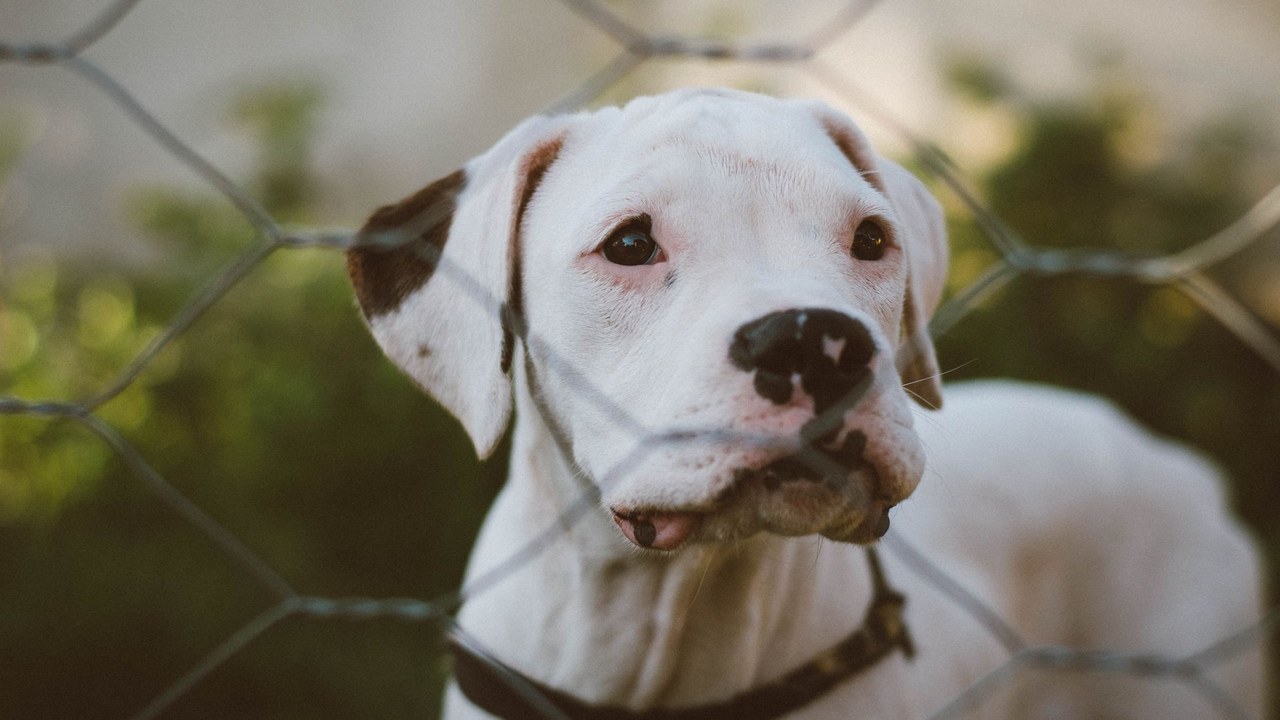
There is a number at the center of this story, and it is not a small one: 713. That is how many days Titus, a Pit Bull at Independence Animal Shelter in Missouri, spent living in a kennel — nearly two full years of watching people walk past, choose other dogs, and leave. This month, his wait ended in a way nobody predicted: not with nobody coming, but with two families racing to be the ones who took him home.
713 Days, In One Kennel
Long-stay dogs are a quiet crisis inside almost every shelter. The public imagines kennels turning over in days or weeks, and for puppies and small dogs that is often true. But a big adult dog — especially a Pit Bull, a breed that faces everything from insurance restrictions to landlord bans — can simply stop being seen. The dog does not change. The walk-past just becomes a habit the building forms around him.
Titus's 713 days were not one unbroken stretch, which almost makes them harder to read. Inside that total sits the most deflating chapter a shelter dog can have: he got out once — and came back.
Adopted, Returned, 30 Pounds Heavier
At some point in his long stay, Titus was adopted. For about six months, he was somebody's dog, in somebody's home, doing the ordinary math of a pet's life — meals, walks, a couch if he was lucky. Then the adoption collapsed for the most common and least canine of reasons: the family lost their home. Shelter returns are often described with a shudder, as if the dog failed a test. In Titus's case the record is clear that the failure was economic, not behavioral — a housing crisis wearing a dog's name.
He came back to the Independence shelter roughly 30 pounds heavier than he left — a detail that is somehow both funny and sad, the physical signature of six months as a loved, fed, indoor dog. And then the count simply resumed, day after day, toward 713.
He was adopted once and returned through no fault of his own — a housing crisis wearing a dog's name.
The Video That Started A Race
The turn came on November 3, when Maria — a shelter-dog advocate who posts as @helpingforgottenpaws — visited the shelter with her son and put Titus's story online: the 713 days, the adoption, the return, the dog himself. It did what the kennel never could. It made him visible.
Among the people it reached was Brittany, who began posting updates about making the interstate drive to adopt him herself. This is the modern mechanics of a shelter-dog rescue: one person films, thousands share, and somewhere in the shares is the one person willing to get in a car. Brittany started driving the story toward its ending in public — followers tracking her progress, the shelter fielding interest, Titus suddenly a dog with a countdown instead of a dog with a count.
The Plot Twist At The Shelter Door
And then came the twist that makes this story better than the version everyone expected. Before the interstate rescue could be completed, the shelter called: a local family — with kids — had walked in and adopted Titus. The viral adopter did not get the dog.
Here is the part that tells you everything about the people in this story: all parties agreed the local home was the right one. Think about what that grace costs. An advocate built the momentum; a would-be adopter invested days, miles and a public commitment; and when a family with children materialized at the shelter door — the exact outcome every share had been hoping for — they stepped back and let it happen. Titus did not need to travel across state lines to be saved. He needed to be seen. Once he was, his own town did the rest.
His shelter story is officially over. After 713 days, the kennel is empty.
Why Long-Stay Dogs Keep Coming Back (And Why It's Rarely Their Fault)
Titus's file is a case study in the real reasons long-stay dogs cycle. Housing sits at the top of the list: lost homes, evictions, landlords who ban bully breeds regardless of the individual dog. Add moves, divorces, deployments and cost — the machinery of human instability — and you get a population of returned dogs whose paperwork says more about our housing market than about their temperaments.
That matters because the label sticks to the dog. A returned animal reads, to the next adopter, as a risk — when in many cases he is better described as the survivor of somebody else's emergency. Shelters that counter this best do what happened here naturally: they tell the dog's whole story, in public, with the ending still unwritten. 713 days is a number that shames the system a little. But the last chapter of Titus's story is the system working — a video, a stranger's drive, a local family's timing, and a dog who, it turns out, was never unadoptable at all. He was just unheard of.