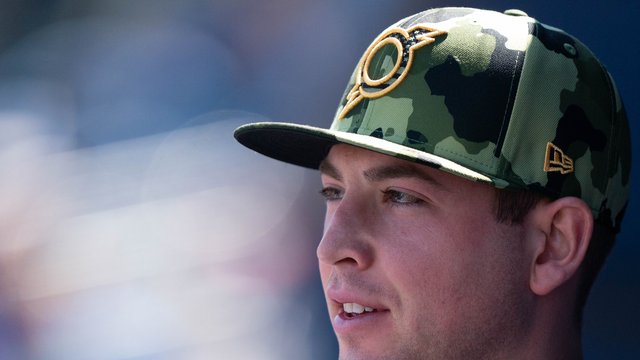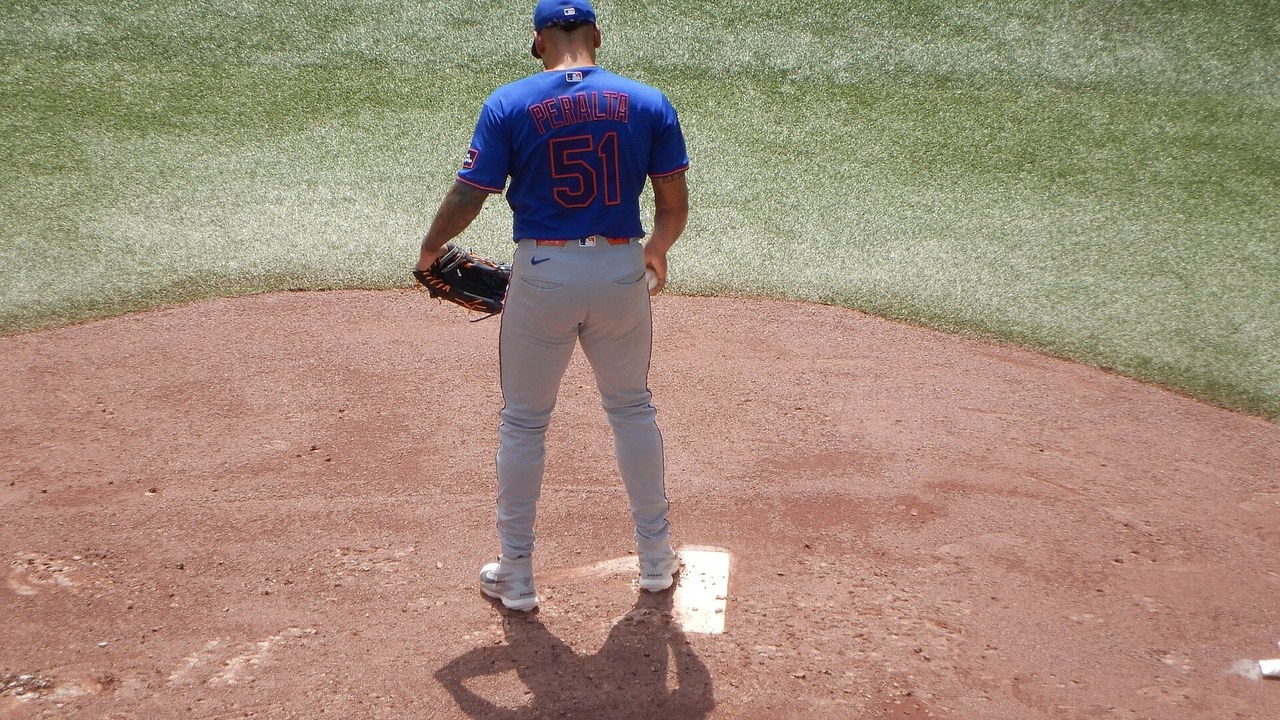
Freddy Peralta is an Oriole. The 30-year-old right-hander has agreed to a five-year, $125 million contract with Baltimore, The Athletic first reported on Tuesday, giving the Orioles a new ace — and the largest pitcher contract in franchise history. The deal is pending a physical, and it contains no opt-outs and no deferred money.
Baltimore moved fast because it had to. On Monday, the Orioles watched Trevor Rogers leave for the Chicago Cubs on a five-year, $120 million deal. Less than a day later, they had his replacement — a two-time All-Star and the reigning American League Championship Series MVP — for $5 million more, plus a compensatory draft pick for losing Rogers.
The Deal, In Full
Peralta will make $25 million a year on average across the five seasons, and he will top a rotation that now looks like this: Peralta, Shane Baz, Kyle Bradish and Brandon Young. Baz and Peralta are signed through 2030; Bradish and Young are under club control through 2031. Because Peralta was traded midseason, he was ineligible for a qualifying offer, so Baltimore gives up no draft compensation to sign him — and the Orioles pick up a compensatory choice after the first round next summer for losing Rogers. It is the second nine-figure contract in two winters for a franchise that used to avoid them: last year Baltimore signed slugger Pete Alonso to a five-year, $155 million deal.
Why Baltimore Paid $125 Million For A Pitcher Coming Off A 4.42 ERA
The headline number hides the story of Peralta's year, which is really two seasons in one. He finished fifth in National League Cy Young voting in 2025, posting a career-low 2.70 ERA across 33 starts for Milwaukee. The Brewers, who were never likely to sign him long term, traded him to the New York Mets last offseason. In Queens, he fell apart: just under a 5.00 ERA across 22 starts, a strikeout rate six points lower than his final Milwaukee season, and a Mets team having a nightmare year around him.
Then came the trade that saved his market. The Tampa Bay Rays acquired him for three prospects at the August 2 deadline, and everything flipped. He threw 55 1/3 innings of 3.25 ERA ball in the regular season, then 21 1/3 more at a 2.95 mark in the postseason as the Rays reached the World Series. From August 26 through his ALCS MVP performance, he went 7-0 with a 0.89 ERA. The Rays leaned on his changeup more, his fastball ticked up from 94 to 95 mph late in the season and touched 97 in the playoffs, and the pitcher who looked finished in New York looked like an ace again.
The honest read is in the middle. His full-season line — a 4.42 ERA over 169 innings — is a clear step back from the 3.40 ERA and 29 percent strikeout rate he posted over the previous three years. That is why he did not get the $200 million-plus deal he could have argued for a year ago, and why he landed between Rogers ($120 million) and Ranger Suarez (five years, $130 million) instead. Baltimore is paying him as a No. 2 starter with ace upside, not as a sure thing.
THE KEY NUMBERS
$125 million: the total value of Peralta's five-year deal with Baltimore. $25 million: his average annual salary. $0: deferred money in the contract — and no opt-out clauses either. 30: Peralta's age. 7-0 with a 0.89 ERA: his record from August 26 through the ALCS, where he was named MVP. 4.42: his ERA across 169 innings in 2026, split between the Mets and the Rays. 2.70: his ERA in 2025, when he finished fifth in NL Cy Young voting. $120 million: what Trevor Rogers got from the Cubs on Monday — $5 million less than Peralta, for the same five years. $155 million: Pete Alonso's deal with Baltimore last year, still the biggest contract in club history.
THE STORY SO FAR
2025 season: Peralta posts a career-low 2.70 ERA across 33 starts for Milwaukee and finishes fifth in National League Cy Young voting. Last offseason: the Brewers trade him to the New York Mets, one year before free agency, after extension talks stall over contract length. Spring and summer 2026: Peralta struggles in Queens, allowing just under 5.00 earned runs per nine innings across 22 starts as the Mets endure a nightmare season. August 2, 2026: the Mets trade him to the Tampa Bay Rays for three prospects. August 26 through October 2026: Peralta goes 7-0 with a 0.89 ERA, wins ALCS MVP, and helps the Rays reach the World Series. Monday, November 23, 2026: Trevor Rogers signs a five-year, $120 million deal with the Chicago Cubs. Tuesday, November 24, 2026: The Athletic's Ken Rosenthal reports Peralta has agreed to a five-year, $125 million deal with the Orioles; the Associated Press and ESPN confirm it.
WHAT HAPPENS NEXT
First, the physical. The deal is not official until Peralta passes it, and the Orioles have not announced it yet. Once that is done, he slots in at the top of the rotation — Baz, Bradish and Young behind him, Brandon Young as the No. 4, and a competition for the fifth spot among Trey Gibson, Cade Povich and a group of prospects. The Orioles are not done, either: they entered the day with a projected 2027 payroll around $127 million, well below the $160 million-plus they opened 2026 with, so there is room for another mid-level signing or two, and they have been linked to a corner outfielder and catching help. And the subplot writes itself: Rogers and Peralta, traded for each other in effect, will be measured against one another — same five years, $5 million apart — for the next half-decade.
The Rush Before The Lockout
The timing is part of a wider scramble. USA Today framed the signing as a deal struck before a looming MLB lockout, and the pace around the league backs that up: in about 12 hours, the Cubs committed $240 million to Rogers and Japanese slugger Teruaki Sato, while the Orioles pivoted from losing Rogers to landing Peralta in less than a day. Peralta, who watched his market collapse once already this year, had every reason to take the sure thing.