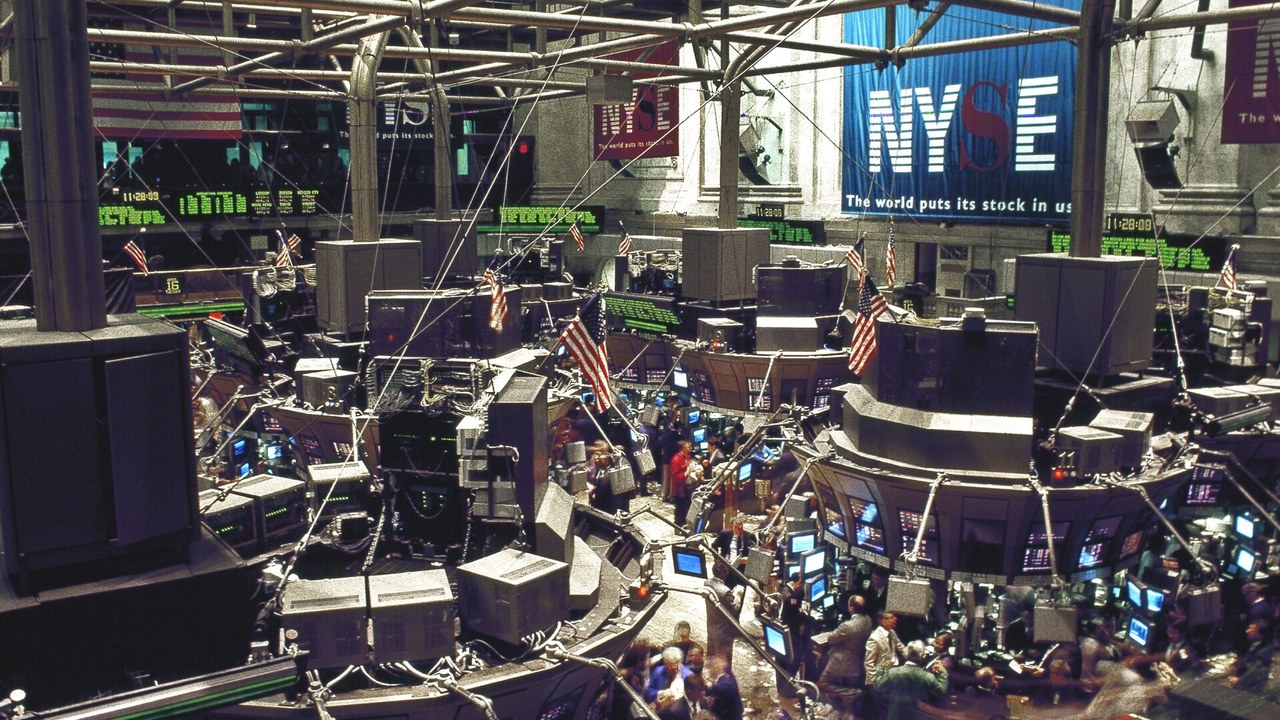
The Dow Jones Industrial Average is back above 50,000. The blue-chip index closed Tuesday at 50,018.70, up 423.39 points — 0.85% — reclaiming the milestone it slipped below on November 20. It is the first close above 50,000 in about a week, and it arrived on one of the strangest days of the year for American stocks: the Dow rose while the Nasdaq fell, and the winners and losers looked like they belonged to two different markets.
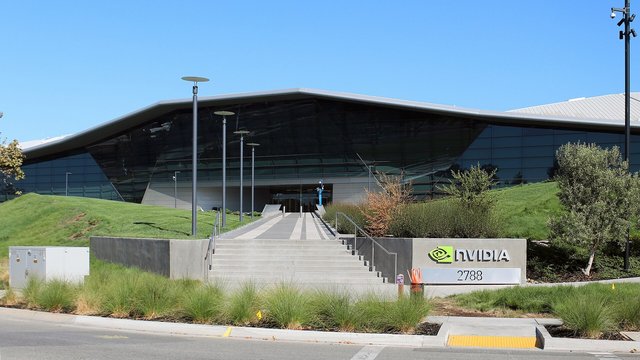
The split was the story. The S&P 500 fell 0.50% to 7,201.09. The Nasdaq Composite dropped 1.48% to 23,733.54. Chip stocks led the sell-off — Nvidia fell 5.86% the day after its 31% comeback rally, and Analog Devices plunged 16.73%. At the same time, the Dow's old-economy names surged: Amgen rose 5.76%, Merck gained 4.50% and Nike jumped 5.89%, with Target and Vertex up roughly 5% to 7% as well. Money rotated out of AI and into healthcare, retail and consumer stocks — and the Dow, which holds far more of the latter than the Nasdaq does, was the beneficiary.
That rotation is why the headline number needs a second look. The Dow is a 30-stock index weighted by share price, and on Tuesday its healthcare and consumer names did the heavy lifting. The Nasdaq, stuffed with the chip and software names that have carried the market all year, went the other way. A single milestone — 50,000 — can therefore be true and misleading at the same time: the Dow is at a high, and the market underneath it is still deciding whether the AI trade is over.
THE KEY NUMBERS
50,018.70 — the Dow's close on Tuesday, November 24, 2026, up 423.39 points (0.85%).
7,201.09 — the S&P 500's close, down 0.50% on the same day.
23,733.54 — the Nasdaq Composite's close, down 1.48%.
+5.76% — Amgen's gain, the day's biggest Dow winner; Merck +4.50%, Nike +5.89%.
−5.86% — Nvidia's fall, giving back part of Monday's 31.5% surge; Analog Devices −16.73%.
November 20 — the last time the Dow closed below 50,000 before Tuesday's reclaim.
Thursday, November 26 — markets closed for Thanksgiving; Friday is an early close.
WHY THE DOW ROSE WHILE TECH FELL
The rotation has a simple cause: investors spent Tuesday selling the year's winners and buying the year's laggards. Chip stocks had run so far, so fast, that any wobble in the AI story — Nvidia's whipsaw week, a Commerce Department crackdown on chip diversion, profit-taking after a 31% one-day jump — was enough to trigger selling. The money did not leave the market. It moved into drugmakers, retailers and consumer brands, the stocks that had been left behind while chips soared.
The Dow's construction made it the winner of that move. Its 30 names lean heavily toward healthcare, industrials and consumer companies, while the Nasdaq's biggest weights are the very chip and software names being sold. When the rotation runs in this direction, the Dow can hit a milestone on a day the Nasdaq loses 1.5% — and that is exactly what happened.
Whether the rotation lasts is the open question. If chip stocks stabilise, the Nasdaq recovers and the two indexes rise together. If the AI sell-off deepens, the Dow's healthcare and retail gains will have to carry the market alone — and they have not had to do that all year. Tuesday proved the market can split. It did not prove which half is right.
THE STORY SO FAR
November 20 — the Dow closes below 50,000, giving back the milestone after days of choppy trading.
Monday, November 23 — Nvidia surges 31.5% after its board reinstates Jensen Huang as CEO, the biggest one-day gain in 23 years, restoring more than $952 billion in market value.
Tuesday, November 24 — the rotation day. Nvidia falls 5.86% to $155.38, Analog Devices drops 16.73%, the Nasdaq loses 1.48% — and the Dow climbs 423 points to 50,018.70 on gains in Amgen, Merck, Nike, Target and Vertex.
Wednesday, November 25 — markets open for a shortened Thanksgiving-week session. The October PCE inflation report lands at 8:30 a.m. ET.
WHAT HAPPENS NEXT
The market gets two tests before the holiday ends. First, Wednesday's October PCE inflation report — expected at 3.8% year on year, up from 3.6% in September — will tell investors whether the Federal Reserve has room to cut rates in December, and December rate-cut odds are running at 91–99%. A hot number would hit the rate-sensitive names that just rallied; a cool one would help them.
Second, Friday's shortened session will show whether Tuesday's rotation was a one-day rebalance or the start of something bigger. If chip stocks bounce and the Dow holds above 50,000, the market has room to run into year-end. If the Dow slips back below the line while tech keeps falling, Tuesday's milestone will be remembered as a one-day headline — and the split market will have to pick a direction.