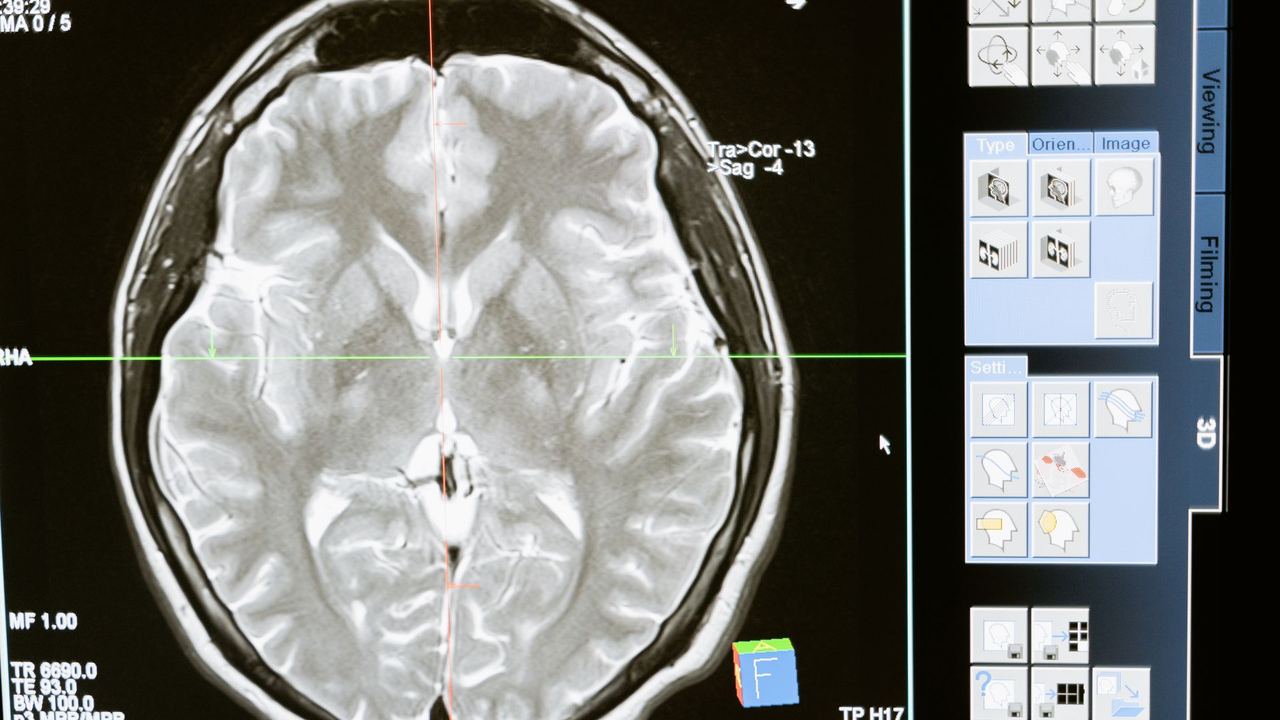
Here is the claim, in the form that has sold a million self-help books: the average human uses only 10% of their brain. Ninety percent sits idle — a locked mansion of potential genius — and somewhere out there is a technique, a drug or a discipline that opens the rest. It is a lovely thought. It is also contradicted by every brain scan ever taken.
The Claim
The 10% figure carries a borrowed lab coat. It has been attributed to Albert Einstein, who never said it. It has been dressed up as the finding of unnamed 'scientists' for over a century. And it survives because it flatters: your failures are not your limits, the story whispers, just your unused percentage. Who would not want to believe the genius is already installed and merely switched off?
In a New Scientist Live survey of 2,000 people, 54% of adults still believed some version of the claim — a majority, holding a belief that neuroscience discarded generations ago. So let us look at what the evidence actually shows.
What Scans Actually Show
Functional MRI studies — the technology that watches blood flow and activity across the living brain — have now mapped human brains through thousands of tasks: language, memory, music, mathematics, faces, fear, sleep. The finding is monotonous in the best way. Over the course of a day, virtually every region of the brain is active. There is no dark continent, no silent 90% waiting for its cue. Even during sleep, the brain cycles through patterns of intense activity; dreaming alone recruits visual, emotional and memory systems in concert.
One clarification keeps the honest version interesting: 'virtually everything is used' does not mean 'everything fires at maximum, all at once.' That would not be genius — that would be a seizure. A healthy brain works like an orchestra, sections rising and resting in turn. The myth's error is confusing a rested musician with an empty chair. The players are all on stage. They simply do not all play every bar.
A brain using 100% of itself at once would not be a genius. It would be a seizure.
The Energy Argument: Evolution Is Cheap
If the scans somehow left room for doubt, the body's budget closes it. The brain is about 2% of your body weight and consumes roughly 20% of your energy — oxygen and glucose burned around the clock, waking or sleeping, genius or not. It is, gram for gram, one of the most expensive organs evolution has ever produced.
Natural selection is a ruthless accountant. A species does not carry a hugely costly organ at ten times its necessary size through lean millennia; oversized, underused tissue gets trimmed, as it has been in countless other lineages. A 90%-redundant brain makes no more evolutionary sense than a spare second head. The organ is expensive because all of it is working — including the parts whose jobs, like regulating organs and stitching memory during sleep, never make it into the highlight reel.
There is a grimmer proof, and neurologists rely on it daily: if 90% of the brain were truly unused, damage to that 90% would be harmless. In reality, there is no spare territory. A stroke or an injury in a small, outwardly quiet region produces specific, predictable losses — of language, of vision, of memory, of movement — because that region was working all along, at a job whose absence is what finally makes it visible. Every part of the brain has a function whose loss is mourned by the person who loses it. Genuinely unused parts would not be missed at all. These are, every time.
How William James Got Misquoted Into A Movie Plot
So where did 10% come from? The trail leads to the psychologist and philosopher William James, who wrote in the early 1900s that people live far below their possible limits — using, as he put it, only a small part of their possible mental and physical resources. It was a motivational metaphor about effort and habit, and James attached no percentage and no anatomy to it. Later writers in the self-help tradition quantified his poetry into a statistic: a metaphor about trying harder became a claim about dormant tissue, complete with a number James never measured because he never meant it literally. The Einstein attribution was pasted on afterward, the way famous names get pasted onto any orphan quote.
Hollywood did the rest. Films like Limitless and Lucy built entire plots on unlocking the dormant 90% — fun fiction, openly invented, which then got quoted back as though it were a documentary finding. The claim now lives in the loop its own history created: a metaphor became a statistic, the statistic became a screenplay, and the screenplay became the 'proof.'
The Verdict
You are using your whole brain — not all at once, not all at maximum, but all of it, across every day of your life. The genuinely hopeful truth the myth buries is better than the fantasy: the brain you have is fully staffed, and what training changes is not a percentage but the wiring — the speed and strength of connections in an organ that was never 90% asleep.