On Saturday afternoon, a spacecraft the size of a 30-storey building fell out of the sky over Texas — and a pair of giant robot arms caught it. SpaceX's Starship, Ship 42, had spent more than 22 hours in orbit after launching on Friday. At about 3:20 p.m. Central time on Saturday, it came back to the same launch pad it left, fired its engines, flipped upright, and eased itself between the arms of the launch tower SpaceX calls Mechazilla. The arms closed around it while it was still hovering above the ground. SpaceX posted three words on X: “Mechazilla catches Starship!”
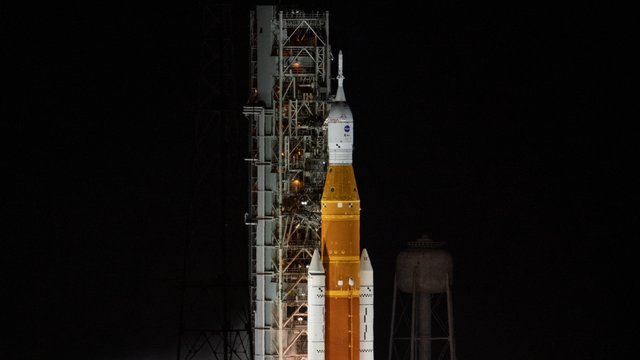
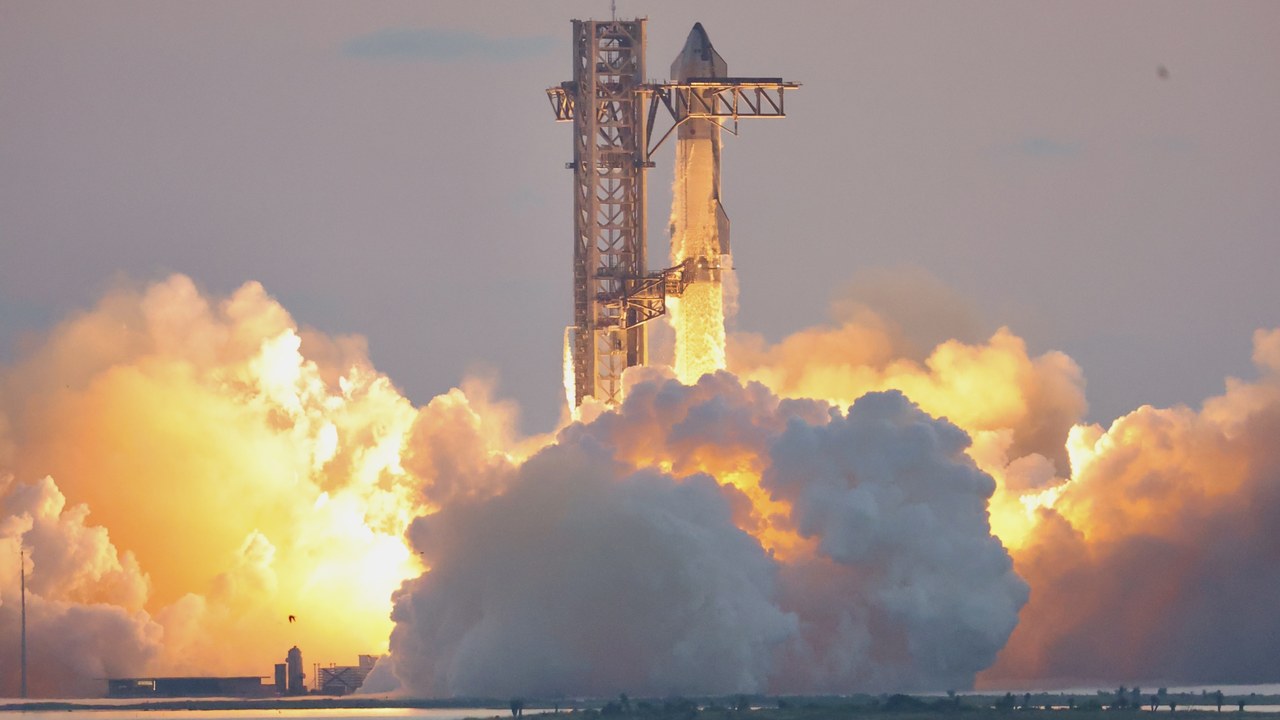
The photo above is from an earlier test flight — a Starship lifting off from Starbase beside the same Mechazilla tower that caught Ship 42 on Saturday.
It was the first time anyone has ever caught a Starship upper stage returning from orbit. SpaceX had caught its Super Heavy booster with the same tower arms before — the first time in 2024 — but the ship itself, the part of the rocket that actually goes to space, had never been recovered on land. “Congratulations to an incredible team at SpaceX,” chief executive Elon Musk posted on X after the catch.
The ship is the hard half of the problem. A booster only flies for a few minutes before coming back. Ship 42 had to survive launch, spend a day circling the Earth, deploy its cargo, then fall back through the atmosphere at thousands of miles an hour, steer itself home, and slow down enough for the tower to grab it. The whole point is reuse: catch the ship, refurbish it, and fly it again — the same way SpaceX already reuses its smaller Falcon 9 rockets. The Wall Street Journal reported that successfully capturing the ship gives SpaceX the chance to refurbish the vehicle for use on a future flight.
But the day was not the clean sweep SpaceX had planned. The flight was supposed to end with two catches, not one. Minutes after liftoff on Friday, the Super Heavy booster underneath the ship ran into trouble. Its boostback burn — the engine firing that turns it around and sends it back to the launch site — ended early because of low fuel mass, SpaceX said. The booster automatically diverted to an offshore splashdown in the Gulf of Mexico, and it was destroyed. The company's live broadcast blamed an onboard fuel alarm, and SpaceX says the root cause is still under investigation.
THE STORY SO FAR
Friday, November 7 — SpaceX publishes its Flight 15 plan: launch Starship's newest design, deploy 26 Starlink V3 satellites, complete about 14 orbits, and try to catch both stages at the tower — a first for the booster and a first for the ship.
Monday, November 10 — Booster 22 is moved to the launch pad. SpaceX calls it the first Super Heavy V3 booster planned to return for a catch.
Friday, November 13, about 4:47 p.m. Central — Flight 15 lifts off from Pad 2 at Starbase, Texas. The roughly 400-foot rocket clears the tower, the stages separate, and all six of the ship's Raptor engines ignite.
Friday, November 13, minutes after liftoff — The booster aborts its return. Its boostback burn ends early, it diverts to the Gulf of Mexico, and it is destroyed. SpaceX later says its flight termination system was triggered after the landing burn shut down, and any debris that washes ashore is being recovered.
Friday, November 13, about 5:15 p.m. Central — Ship 42 reaches orbit, about 275 kilometres up. It deploys all 26 Starlink V3 satellites, and SpaceX says it made contact with every one of them. Only one earlier Starship flight had ever reached orbit.
Saturday, November 14, 1:18 p.m. Central — SpaceX polls its teams and gives the go to bring the ship home to Starbase.
Saturday, November 14, about 2:25 p.m. Central — Ship 42 fires a single engine for a 10-second deorbit burn, then falls back through the atmosphere, steering around major cities in the Rio Grande Valley and passing north of South Padre Island.
Saturday, November 14, about 3:20 p.m. Central — Three Raptor engines light for the landing flip, the tower's arms close, and Mechazilla catches Starship — about 22 and a half hours after it left the same pad.
WHAT THE CATCH MEANS
A catch is not just a stunt. Starship is the biggest rocket ever flown, built to carry 100 metric tons of cargo — far more than any rocket flying today. If SpaceX can reliably launch it and catch both halves, satellite launches get dramatically cheaper, and the same vehicle becomes the workhorse for everything from giant internet constellations to Moon and Mars missions. SpaceX has already signalled it plans to wind down its Falcon 9 programme and focus on Starship.
The cargo on this flight mattered too. The 26 Starlink V3 satellites Ship 42 carried are a new, larger design. SpaceX says each one adds a terabit of network capacity, and this single batch carries roughly as much as ten Falcon 9 launches of the older satellites. Service from the new satellites could begin within a few weeks, after checks.
The catch also settles a question that has followed Starship since its first flights: whether the ship can come home at all. Three satellites on board carried cameras to inspect the heat shield during the flight, and the ship passed three checkpoints — near Hawaii, off Chile, and near Hawaii again — where SpaceX could have diverted it to a splashdown if anything looked wrong. It passed all three.
“Congratulations to an incredible team at SpaceX.” — Elon Musk, on X, after the catch
WHAT HAPPENS NEXT
SpaceX has not announced a date for Flight 16, and it has not said what it found in the booster investigation. The first job is understanding why Booster 22's boostback burn ended early — the fix decides whether the next flight can attempt the double catch SpaceX wanted this time.
Ship 42 now goes through inspection. The heat shield, the engines and the structure that survived re-entry will be checked before SpaceX decides whether it flies again. If it does, it will be the first Starship upper stage ever reflown — the step that turns a spectacular catch into a routine one.
For now, the record stands as a half: the ship came home, the booster did not. SpaceX got the catch it had chased for years — and a reminder of how much still has to work perfectly for both halves to land.