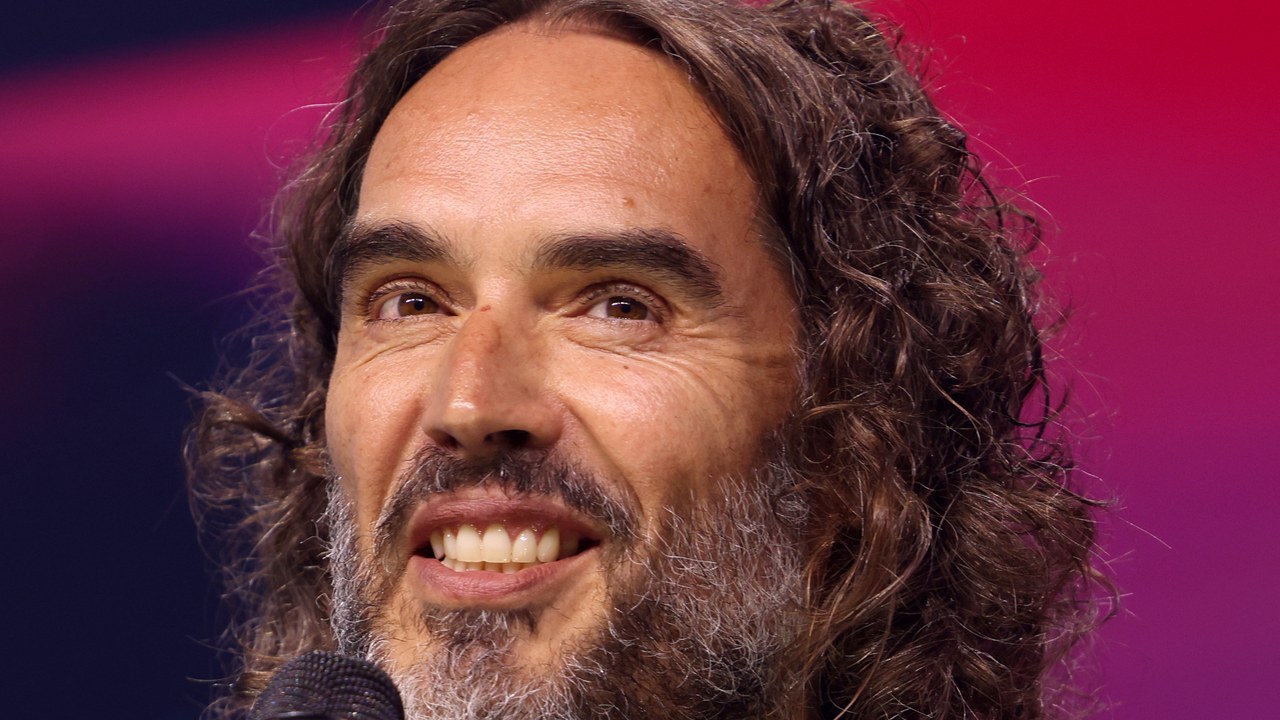
Russell Brand has spoken from prison for the first time since he was jailed — and within hours, the British government said it was investigating him all over again. His wife Laura read his message out on a YouTube podcast, telling viewers her husband still insists he is innocent. On Monday, the Prime Minister’s office called the message “clearly appalling” and said it was being “urgently investigated.”
The message itself was short. Laura Gallacher told the podcast audience that her husband wanted viewers to hear it in his own words: “As you know I am not guilty for the offences I have been jailed for.” It was the first public statement from Brand since a jury convicted him and a judge sent him to prison for ten and a half years.
What Brand’s Message Actually Said
Brand, 51, was jailed earlier this month after being found guilty of raping one woman and sexually assaulting three others. He had denied all the charges throughout the case and told the court that every encounter was consensual. The message read out by his wife does not add new evidence or a new legal argument — it simply restates the innocence claim he has made from the start, now from inside prison.
The message arrived after a move behind bars. According to reports in The Sun on Sunday, Brand was transferred on Friday from HMP Wandsworth, where he was first held after sentencing, to HMP Littlehey, a Category C prison in Cambridgeshire. His wife’s podcast appearance — reading a statement written by a prisoner to an online audience — is what turned a family update into a government investigation.
Why The Message Is Being Investigated
Prisoners in Britain are strictly banned from making statements that cause distress to victims, and speaking to the media is only permitted in exceptional circumstances. That is the rule the Prime Minister’s spokesperson pointed to on Monday, adding that action would be taken if Brand was found to have broken it — and that a prisoner cannot get around the rules by asking someone else to read out their comments.
The spokesperson was asked about the podcast directly, and the answer left no room for doubt about how the government sees it. The message, in the government’s words, was “clearly appalling” and is now being “urgently investigated.” What that investigation decides — and what action, if any, follows — is the next thing to watch.
Claim Vs. Record — ‘Not Guilty’ Against The Verdict
Here is the claim, next to the record, because the gap between them is the whole story. The claim in Brand’s message is that he is not guilty of the offences he was jailed for. The record is that a jury of eight men and four women at Southwark Crown Court heard a four-week trial and found him guilty of attacking four of his six accusers — one count of rape and three counts of sexual assault. The same jury cleared him of two further counts of rape and one count of attempted indecent assault.
The sentencing judge called Brand a “sexual predator” and denounced his “casual and arrogant disregard” for any woman who said no.
Judge Joel Bennathan sentenced him on Monday, November 9, to ten and a half years in prison. The charges covered six women and incidents said to have taken place between 1999 and 2009. Brand testified during the trial that all the encounters were consensual — the jury believed the women on four counts, and did not on three.
None of that is changed by a message read out on a podcast. A claim of innocence is not new evidence, and a jury verdict is not undone by a statement from prison. What the message does change is Brand’s own position: he has now used his first week in prison to speak publicly, and the authorities are deciding whether that speech itself broke the rules.
Why This Message Travelled So Fast
Brand has been one of the most-searched names in the English-speaking world for days. His Wikipedia page drew more than a million views on the day he was sentenced, November 9, and more than half a million the day after — numbers that put a court case ahead of almost everything else people were reading about that week. The story also reaches into American celebrity news: Brand is the former husband of US pop singer Katy Perry, whose first night out since his sentencing was itself a headline last week.
There is also a second strand running alongside the prison message. British police said last week that detectives were assessing a number of new reports made about Brand. No charges have been announced from those reports, and the police have not described them in detail — but their existence is one more reason this story is still moving, a week after the sentencing.
THE STORY SO FAR
2023 — Allegations against Brand first become public. He denies them and says he has never had non-consensual sex. October to November 2026 — A four-week trial runs at Southwark Crown Court in London, covering six women and incidents said to have taken place between 1999 and 2009. November 5, 2026 — The jury convicts Brand of one count of rape and three counts of sexual assault, and clears him of two counts of rape and one count of attempted indecent assault. November 9, 2026 — Judge Joel Bennathan sentences him to ten and a half years in prison. Last week — British police say detectives are assessing a number of new reports made about Brand. Friday, November 13 — Reports say Brand is moved from HMP Wandsworth to HMP Littlehey in Cambridgeshire. Monday, November 16 — His wife reads his prison message on a YouTube podcast, and the Prime Minister’s office says the authorities are urgently investigating whether it broke prison rules.
WHAT HAPPENS NEXT
The investigation into the message comes first. The prison authorities will decide whether Brand broke the rules on statements that cause distress to victims, and the government has already said action will follow if he did. Separately, police are still assessing the new reports made about him last week, and any decision on those will come from the police, not from a podcast.
For now, the message has done one thing for certain: it has put Brand back at the centre of the conversation, one week after his sentencing — and it has put the question of what a prisoner can say from behind bars in front of the British government.