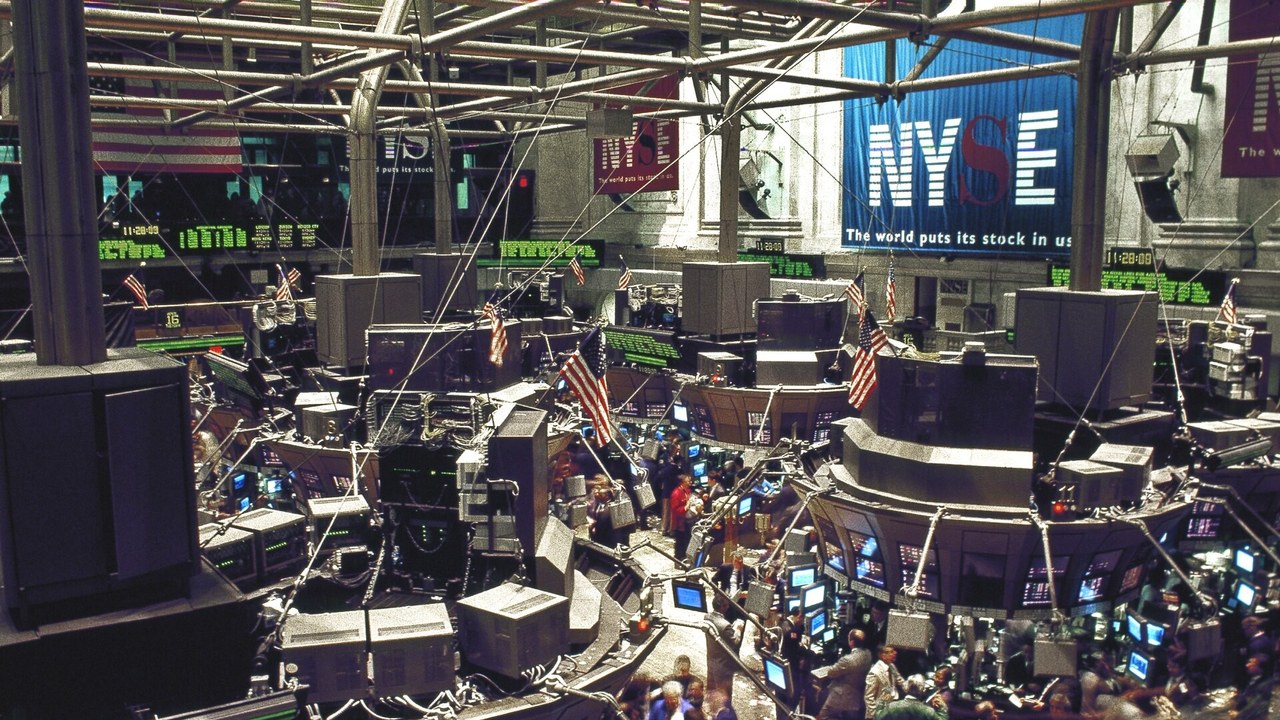
The Nasdaq Composite fell about 4% on Wednesday, wiping out Monday's entire rally in two sessions. Nvidia led the slide, dropping more than 8%, as three problems hit Wall Street at once: doubts about the AI boom, inflation that refuses to cool, and a new round of tariff proposals from the Trump administration.
By late morning the Nasdaq was down almost 900 points, the Dow had lost more than 600, and the S&P 500 was sliding toward 7,000. At one point the Nasdaq was down as much as 4.4% and the Dow had shed more than 1,000 points — The Nasdaq 100 even briefly fell 20% from its record closing high — the textbook line for a bear market — before climbing back above it.
THE KEY NUMBERS
Nasdaq Composite: down 3.79% (899.93 points) to 22,833.60 at 11:28 AM ET. S&P 500: down 2.51% (181.04 points) to 7,020.05. Dow Jones Industrial Average: down 602.93 points (1.21%) to 49,415.77. Nvidia: down 8.7%. Philadelphia Semiconductor Index: down 7.3%. Broadcom: down 5.4%. Microsoft: down 2.8%. The market's fear gauge, the VIX, surged to 33. The 10-year Treasury yield fell to 4.82% from 4.91%, and oil rose 1.1% to $89.80 a barrel. Both indexes are on track for their worst November since 2008, and the S&P 500 is down roughly 7% for the month.
The maths of the drop tells the story. On Monday the Nasdaq jumped 6.5% to 24,089.56 after Jensen Huang was reinstated as Nvidia's CEO. By late Wednesday morning it was at 22,833.60 — down about 1,256 points, or 5.2%, in two sessions. The Dow made the round trip too: it closed at 50,018.70 on Tuesday, gaining 423 points, then fell back below the milestone before midday on Wednesday. The bear-market scare was real but brief: the Nasdaq 100 touched the 20%-below-its-record line and recovered — the difference between a scare and an actual bear market.
Why Nvidia Led the Fall
Nvidia is the stock that matters most to this market, and on Wednesday it was the biggest weight dragging it down. The relief over Huang's surprise reinstatement as CEO on Monday — the news that powered the Nasdaq's 6.5% jump — faded fast. We covered the first leg earlier, when Nvidia fell 6% the day after Huang's return; Wednesday's drop of more than 8% is the slide deepening, not a new problem.
The worry now is bigger than one chief executive. Investors are asking whether the enormous spending on AI infrastructure will ever produce the profits the market has priced in, and questions about Nvidia's corporate governance — including the role of a US president who owns millions of dollars' worth of shares in the company — are adding to the unease. There are also fears that export controls and tariffs could knock Nvidia's profits if much of its revenue came through Chinese conduits.
Hot Inflation Changed the Fed Maths
The second blow landed before the market opened. The Bureau of Economic Analysis reported that the Fed's preferred inflation gauge, the PCE price index, rose 3.8% in October from a year earlier, with core PCE (excluding food and energy) up 3.3%, the hottest reading since November 2023. We covered the PCE report in full earlier today: it is well above the Fed's 2% target, and Wall Street now expects the Fed to raise its benchmark interest rate at its December 8–9 meeting. Higher rates make borrowing more expensive — exactly what the debt-fuelled AI buildout does not need.
The economy is not collapsing — third-quarter growth was revised up to a 4.3% annual rate, the fastest in three years. But much of that spending comes from large tech firms building AI infrastructure and from upper-income households, while poorer Americans lean more on credit. That split is why a hot inflation print hurts tech stocks most.
The Tariffs Landing on Top
The third blow is the new tariff proposal we reported earlier today: the US plans new tariffs on 14 major trading partners, including China, the European Union, India and Japan, China faces a proposed 20% levy on top of the roughly 25% duties already in place — and that rate could rise to 40% if the trade truce breaks. The measures still face a public comment process, with final action possible as early as January, but markets do not wait for the paperwork: tariffs mean higher costs, and stubbornly high prices were already a factor in voters handing the House and Senate to Democrats.
“At this point, between the AI angst and the newly announced tariffs, it doesn't look like the Santa Claus Rally is in store for us this year.” — Chris Zaccarelli, chief investment officer for Northlight Asset Management, in a research note.
The Sell-Off Went Global
It was not just a Wall Street story. South Korea's Kospi lost 6.2% as Samsung Electronics fell 9.9% and SK Hynix plunged 11.1%. Japan's Nikkei 225 dropped 2.8%, and SoftBank slumped 14.8%. Markets fell across Europe too. The AI trade was a global trade on the way up, and it is a global trade on the way down.
THE STORY SO FAR
Monday, November 23: the Nasdaq jumps 6.5% to 24,089.56 as Jensen Huang is reinstated as Nvidia's CEO. Tuesday, November 24: the rally fades — the Nasdaq falls 1.5% to 23,733.54 while the Dow gains 423.39 points to 50,018.70, above 50,000. Wednesday, November 25, 8:30 AM ET: the BEA releases October's PCE report — headline inflation 3.8%, core 3.3%. Wednesday morning: the tariff proposal lands and the selling begins. By 11:28 AM ET the Nasdaq is down 3.79%, the S&P 500 down 2.51%, and the Dow down 602.93 points. During the session the Nasdaq 100 briefly falls 20% from its record closing high, then recovers.
WHAT HAPPENS NEXT
US markets are closed on Thursday, November 26, for Thanksgiving, and Friday is a shortened session, with the stock market closing at 1:00 PM ET — leaving investors almost no time to react before the long weekend. The next real test is the Fed's December 8–9 meeting, where a rate hike is now the market's base case. The tariff proposal goes through public comment first, so the final rates — and whether China's goes to 40% — will not be known until January. Nvidia remains the stock to watch: if it stabilises, the market probably does too.