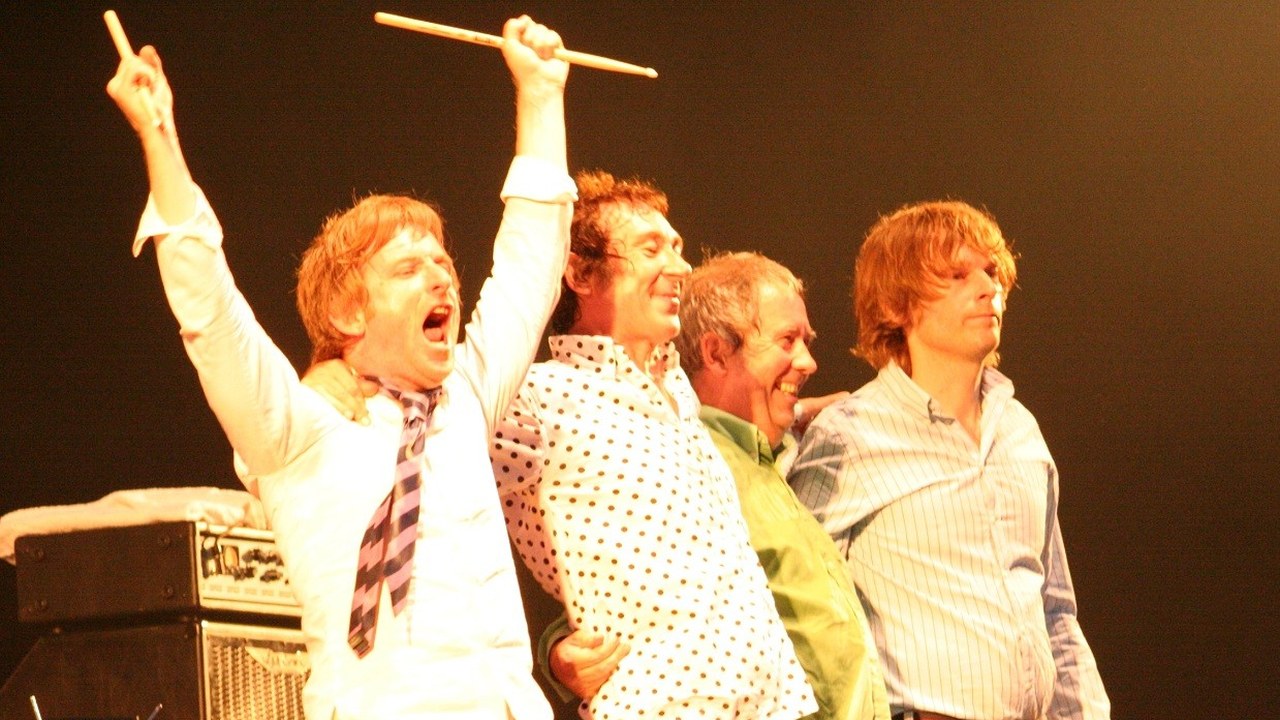
Phil Barker, the drummer who powered the pioneering British punk band Buzzcocks for 14 years, has died at 65. The band announced his death on Thursday, November 26, saying he died peacefully in his sleep on Saturday, November 21, on the Isle of Wight, after a five-year battle with cancer.
Barker joined Buzzcocks in 1992, alongside bassist Tony Barber, and stayed behind the kit until 2006. He played on four of the band's albums, toured with Nirvana in 1994, and carried the band through its busiest years — the 1990s reunion era and the early 2000s — when the songs he powered were the ones crowds came to hear. He is survived by his wife, Deb, his wife of 26 years. The five-year cancer battle he fought was one he had kept largely private — the band's statement was the first most fans heard of it.
WHAT THE BAND SAID
The announcement came as a short statement on the band's official website. In full:
We're saddened by the news of the passing of our longtime drummer Phil Barker. He died peacefully in his sleep on Saturday, November 21, 2026, on the Isle of Wight, after a five-year battle with cancer.
The statement did not name the type of cancer Barker had been fighting, and it did not include funeral or memorial details. The band kept the announcement to those two sentences — and the music press picked it up within hours, with Page Six, Rolling Stone, American Songwriter and Far Out all carrying the news on Friday.
HIS 14 YEARS WITH BUZZCOCKS
Buzzcocks formed in Manchester in 1976 and helped invent British punk — fast, melodic, funny and furious, with songs like "Ever Fallen in Love (With Someone You Shouldn't've)" that still fill rooms nearly fifty years later. By the time Barker joined in 1992, the band was rebuilding: founding singer Pete Shelley and guitarist Steve Diggle had brought Buzzcocks back, and Barker and Barber became the rhythm section that held the reunion together.
The lineup Barker joined toured with Nirvana in 1994 — one of Nirvana's last tours — and recorded four albums between 1993 and 2006: Trade Test Transmissions (1993), All Set (1996), Modern (1999) and Flat-Pack Philosophy (2006). Barker left the band in 2006, the year the last of those records came out. Shelley died in 2018; Diggle still leads the band today.
THE KEY NUMBERS
65 — Barker's age when he died.
5 years — the length of the cancer battle the band says he fought, largely in private.
14 years — Barker's time behind the kit for Buzzcocks, from 1992 to 2006.
4 — the albums he recorded with the band: Trade Test Transmissions, All Set, Modern and Flat-Pack Philosophy.
26 years — his marriage to Deb, who survives him.
5 days — from Barker's death on Saturday, November 21, to the band's announcement on Thursday, November 26.
THE STORY SO FAR
1992 — Phil Barker joins Buzzcocks on drums, alongside bassist Tony Barber, with founding members Pete Shelley and Steve Diggle.
1993 — The lineup records Trade Test Transmissions, its first album together.
1994 — Buzzcocks tour with Nirvana, one of Nirvana's last tours before Kurt Cobain's death.
1996–1999 — All Set (1996) and Modern (1999) follow, with Barker driving the band's sound through its busiest touring years.
2006 — Flat-Pack Philosophy is released, and Barker leaves the band after 14 years.
2018 — Pete Shelley dies, leaving Diggle to carry Buzzcocks forward.
Saturday, November 21, 2026 — Barker dies peacefully in his sleep on the Isle of Wight, with his family around him, after a five-year battle with cancer.
Thursday, November 26, 2026 — Buzzcocks announce his death on the band's official website. The news spreads through the music press on Friday, November 27.
WHAT HAPPENS NEXT
Tributes are already pouring in from fans who saw Barker play in the 1990s and 2000s — many of them sharing memories of the same four-man lineup that toured relentlessly through that era, including shows as far back as a 1996 date in Cincinnati that fans were recalling in the hours after the announcement. The band has not announced any funeral or memorial plans, and its statement gave no further details about the cancer Barker had been fighting.
What Barker leaves behind is the sound of a band that never really stopped. The four albums he recorded with Buzzcocks are still in print, the songs he drummed on are still the ones the band plays live, and the beat he kept for fourteen years still runs underneath every Buzzcocks show — because the songs he spent those years powering are the ones the crowd comes to hear.